Read the room before building the outfit
Consider the event, venue, time of day and people you will meet. A casual dinner, a creative office and a client presentation can all use the phrase smart casual while expecting different levels of polish. If the invitation is vague, ask the host or choose a simple middle ground: clean, well-fitting clothes, restrained colors and shoes in good condition.
Start with a balanced formula
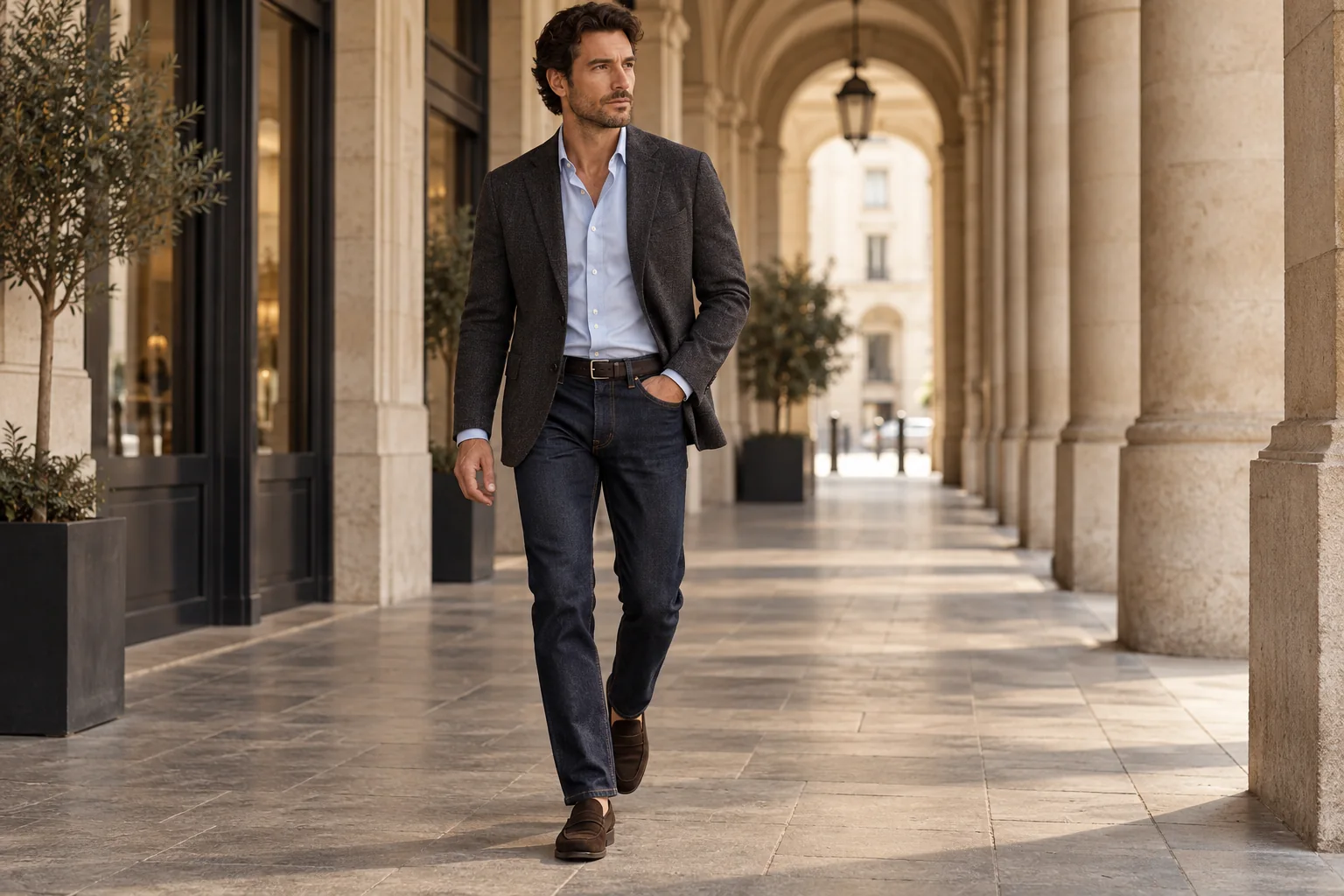
A useful outfit usually combines a refined piece with relaxed pieces. Try a pressed Oxford shirt with dark jeans and a clean leather sneaker, or a fine-gauge knit with chinos and a plain boot. A casual blazer can work over a simple tee when the fit and fabric are appropriate. The formula is more flexible than a checklist because each garment changes the level of formality.
Keep the silhouette coherent. If the trousers are relaxed and wide, a very short, tight top can look disconnected. If the jacket is structured, a highly distressed jean may create more contrast than intended. You do not need every item to be formal; you do want the pieces to look like they belong to the same occasion.
Use color and texture to create intention
A restrained palette makes combinations easier. Navy, charcoal, cream, olive, brown and indigo can be mixed in many ways, but contrast is useful too: a light shirt under a dark jacket gives the outfit a clear center. Texture—Oxford cloth, knitwear, denim or suede—adds interest without relying on logos or bright color.
When you wear a patterned shirt, keep the jacket and trousers quieter. If the outfit is mostly solids, a textured knit or a more distinctive shoe can add depth. One point of interest is often enough.
Choose shoes that match the most formal part
Shoes influence the whole outfit. A clean low-profile sneaker can work with dark jeans and an unstructured jacket; a leather derby or simple boot may suit a more polished setting. The shoes should be comfortable for the event and in good condition. A formal shoe cannot make an ill-fitting outfit feel right, but worn-out footwear can make a considered outfit look unfinished.
Three easy combinations to adapt
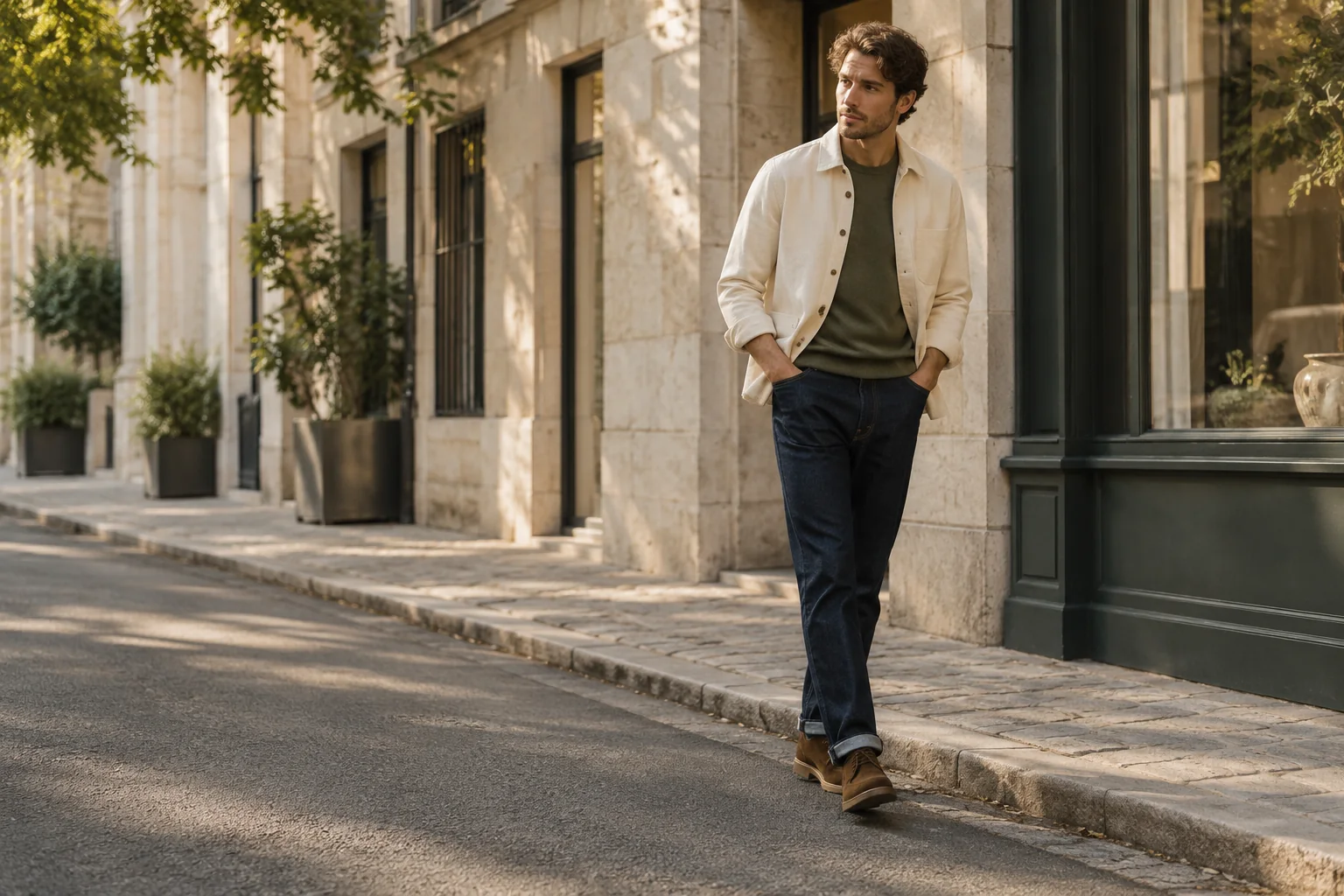
- Relaxed dinner: dark straight jeans, an Oxford shirt, a light overshirt and clean sneakers.
- Creative workplace: chinos, a textured knit and an unstructured jacket with a plain leather shoe.
- Travel-to-meeting day: comfortable dark trousers, a breathable shirt, a removable layer and shoes tested for walking.
These are starting points, not rules. Swap pieces to respect the setting and weather. A lighter jean or a tee can work in a casual environment; a tailored trouser may be needed when the occasion is more formal. Our chinos-versus-jeans guide helps you decide which bottom fits the context.
Fit and condition do most of the work
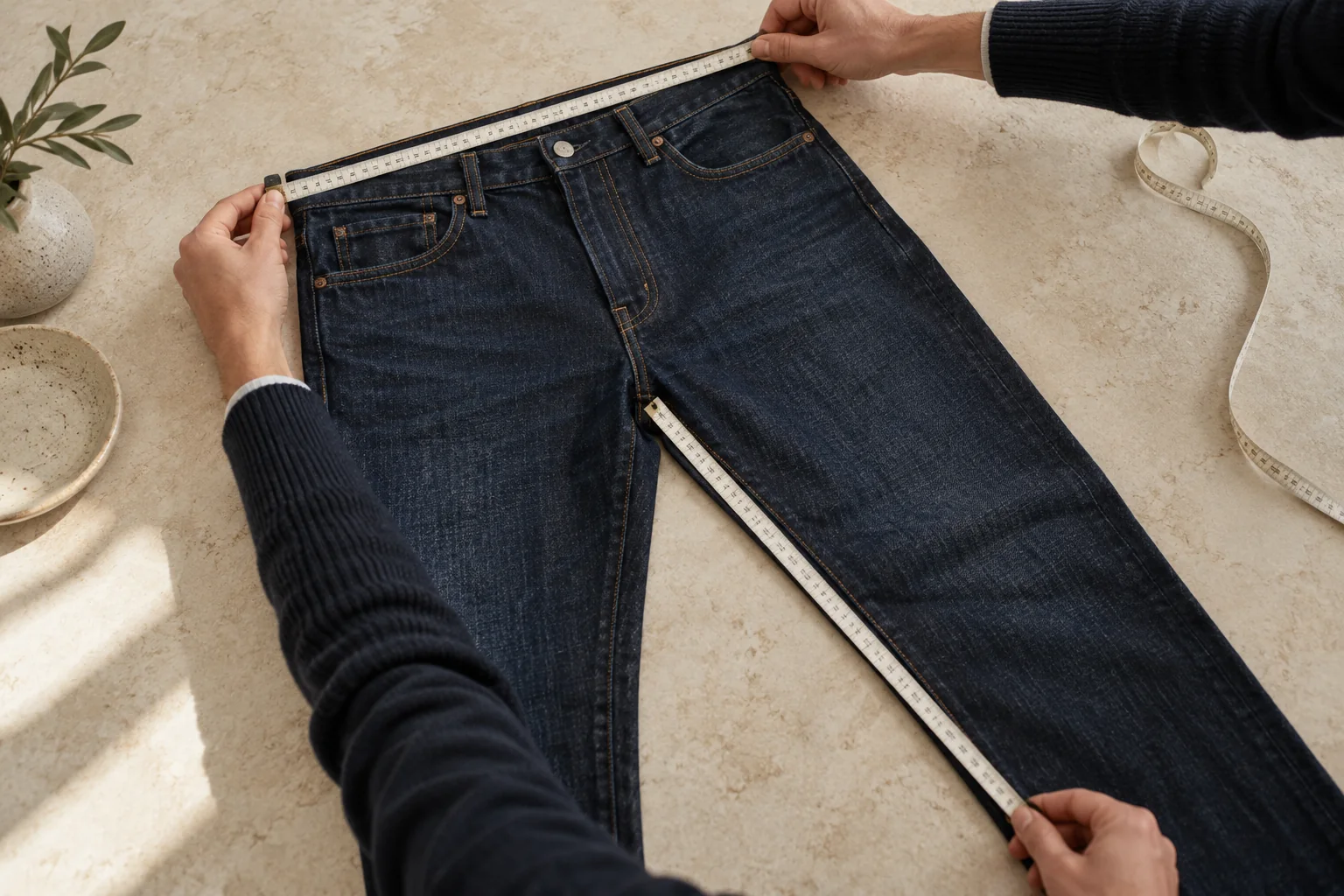
Check the collar, shoulder, sleeve and hem on a shirt. Sit down in the trousers. Make sure the jacket closes without pulling if you intend to button it. Remove lint, brush off shoes and address small repairs. These quiet details usually matter more than adding another accessory.
Building around repeatable pieces can make smart casual less stressful. See our wardrobe planning guide for a practical way to connect shirts, jeans, shoes and layers.