Set up a reliable comparison
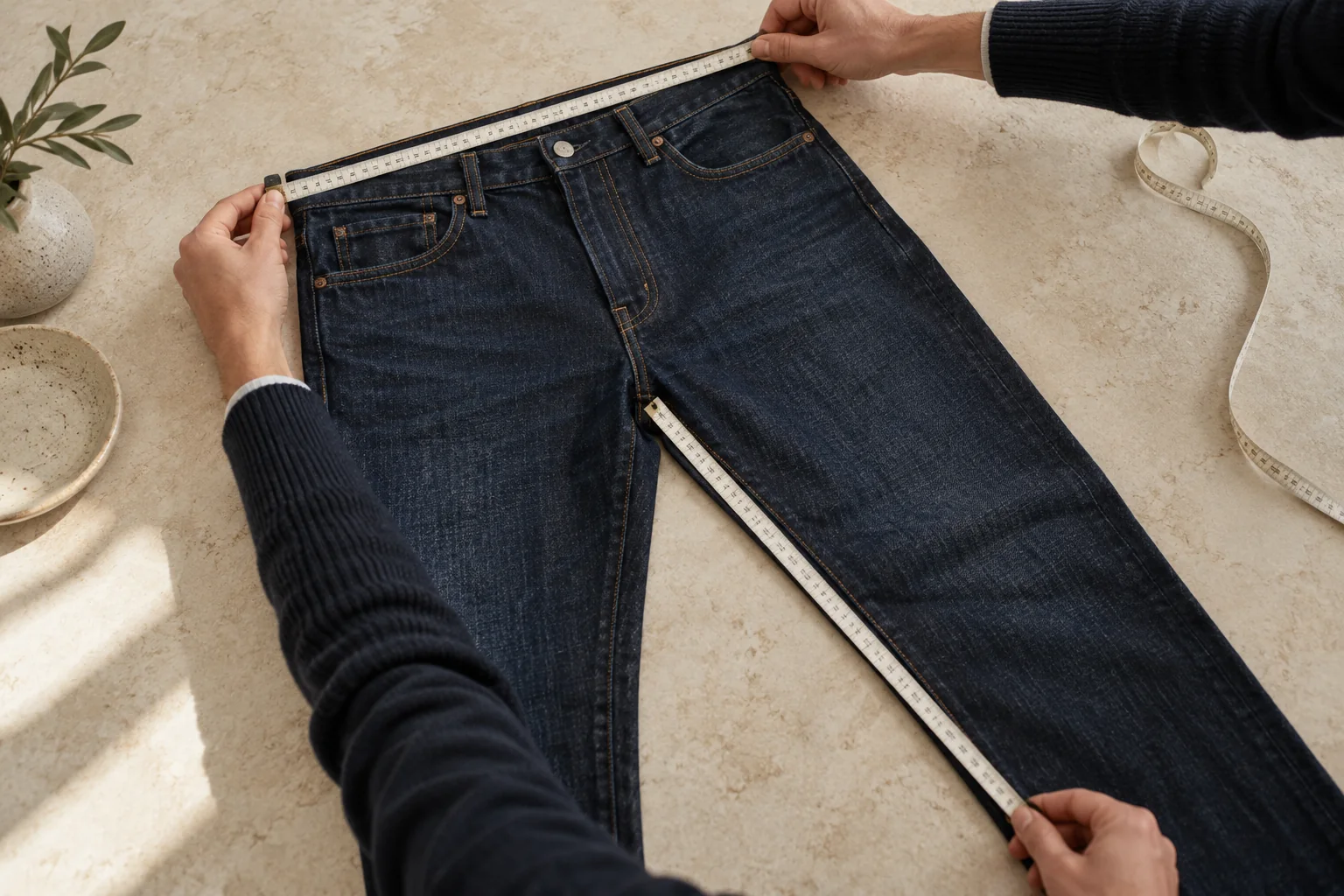
Use a flexible tape measure, a flat surface and a pair of jeans you like wearing. Lay the jeans flat, smooth the fabric without stretching it and fasten the button and zipper. Record the brand, model, tagged size and how the pair feels after a full day. A number without context is not a fit history.
Measure the waistband
Measure straight across the top of the waistband from one side to the other. Keep the tape level and do not pull the waistband taut. Some guides ask for the full circumference; others list a flat measurement. If the chart is unclear, check its diagram or help page before comparing. Doubling a flat measurement is a helpful estimate, not a guarantee that the body measurement will match exactly.
Record the rise and seat
For front rise, measure from the crotch seam to the top edge of the front waistband, following the seam. Back rise uses the same start point and follows the back seam. These measurements help explain why two pairs with the same waist size feel different when sitting. For the seat, compare the garment's hip measurement at the widest point if the brand provides it; otherwise, note whether your current pair is snug, balanced or loose through the seat.
Compare thigh and leg opening
Measure the thigh a short distance below the crotch seam, perpendicular to the leg. The exact distance matters, so use the same point for every pair and compare measurements only when the retailer's method matches yours. At the hem, measure straight across the opening. A small difference can change how the jeans fall over sneakers or boots.
Measure inseam without guessing
Run the tape from the crotch seam along the inside leg to the hem. Keep it straight and relaxed. If your current hem is shortened, it reflects your preferred length; if the jeans are new and unhemmed, the listed inseam gives you a more useful comparison. Consider whether you want a slight break, a clean no-break finish or a cuff before choosing a length.
Use body measurements as a second check
For your body waist, measure where you intend to wear the jeans, keeping the tape snug but not tight. Do not substitute a trouser size from another brand. If you are measuring your hips or seat, stand naturally and keep the tape level. If the size guide offers a size finder or category-specific chart, follow that guide for the exact product rather than applying a generic conversion from another retailer.
How to read a chart when measurements are missing
Look for product-specific notes such as "relaxed through the thigh," "high rise" or "size up if between sizes." Read customer reviews for recurring fit patterns, but treat them as context rather than a substitute for the brand's chart. A size that works in stretch denim may not feel the same in a rigid fabric, even when both pairs have the same waist label.
Before you place the order
- Confirm whether the chart shows body or garment measurements.
- Check the selected wash and fabric; styles within one brand can differ.
- Read current shipping, exchange and return terms.
- Check whether hemming or alterations affect return eligibility.
The goal is not to predict fit with laboratory precision. It is to reduce avoidable uncertainty. A few minutes with a tape measure and a well-fitting reference pair can make online shopping calmer and returns less likely. For help choosing the silhouette itself, read our men's jeans fit guide.