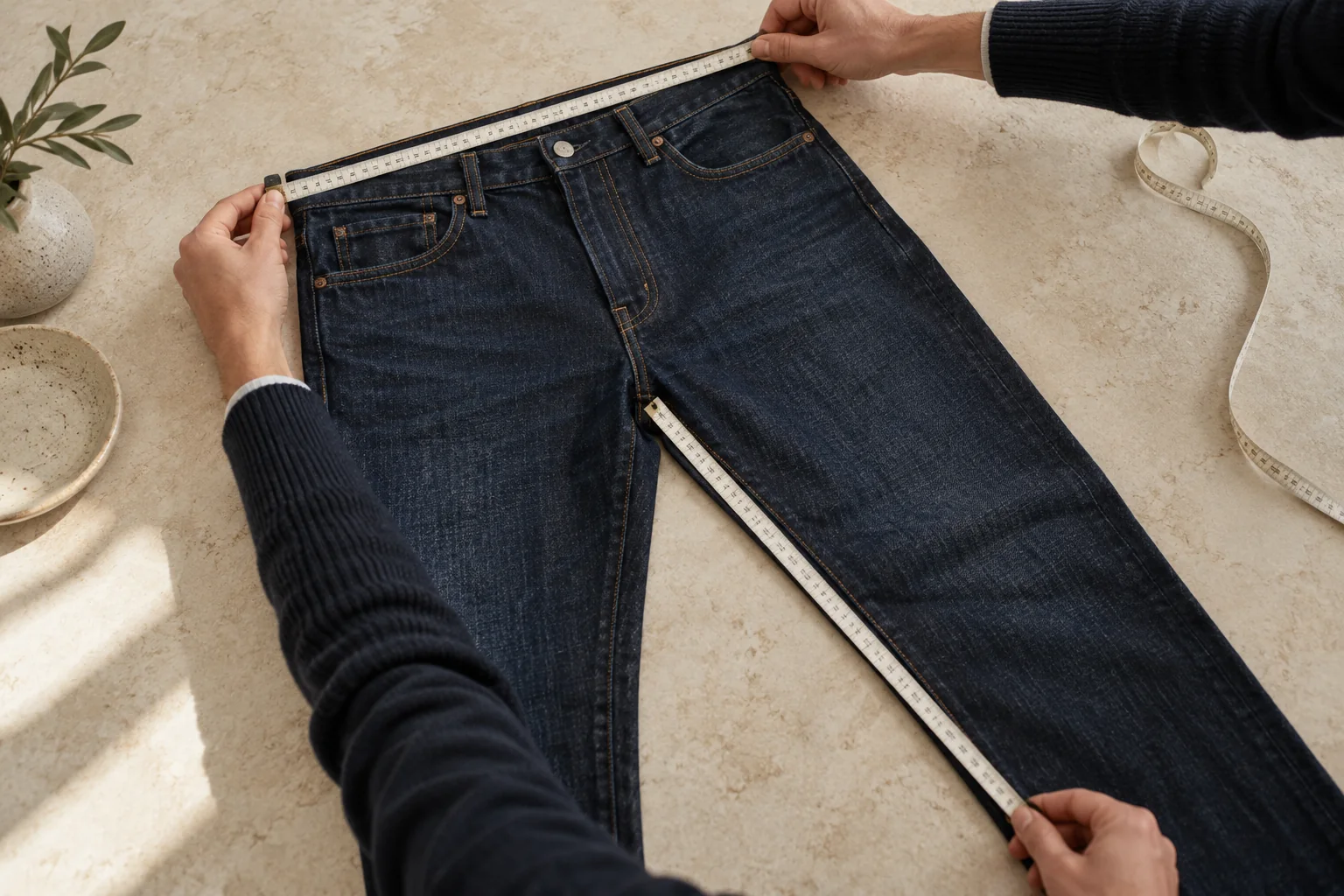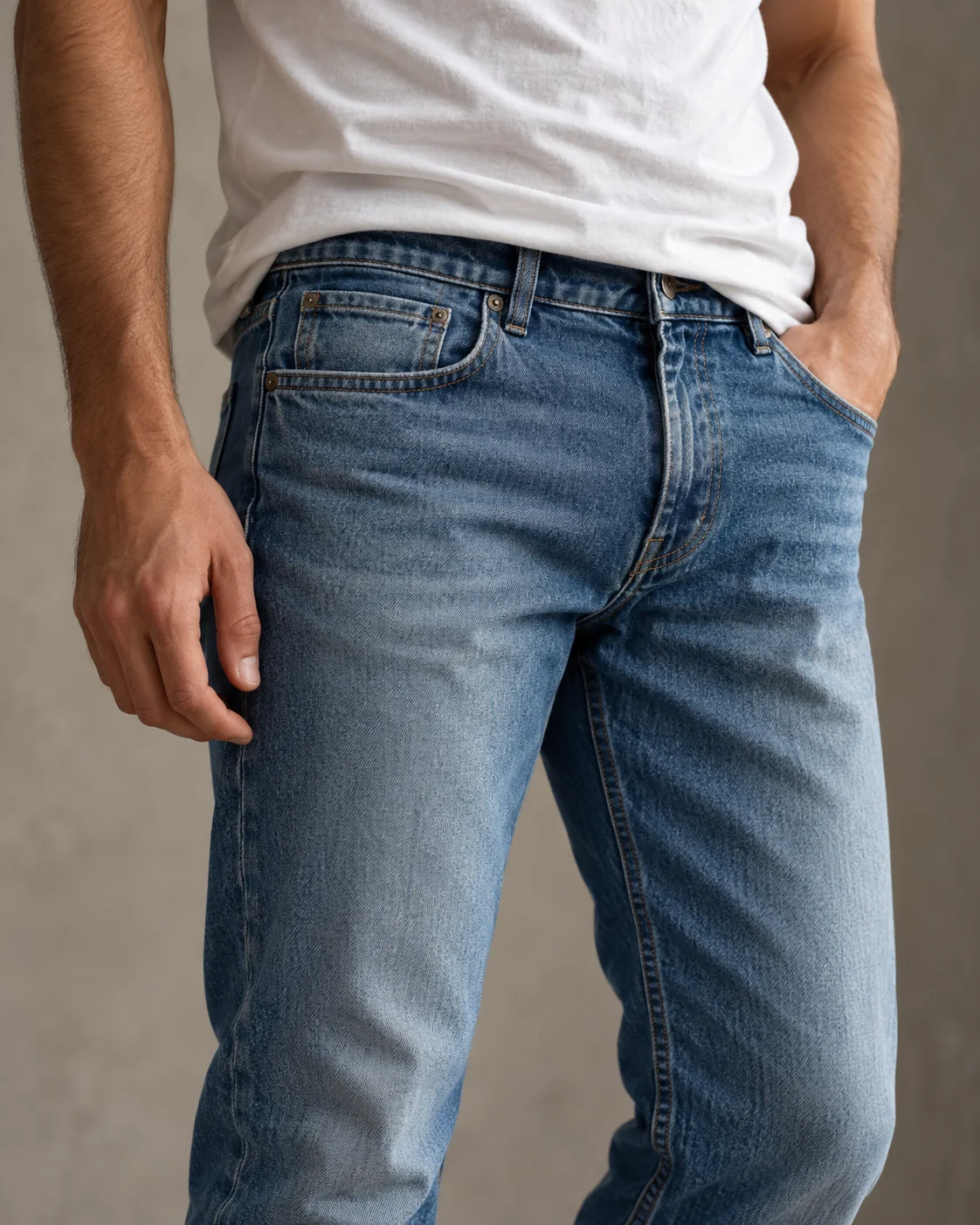
Start with the rise and seat
The rise is the distance from the crotch seam to the top of the waistband. It changes where the jeans sit on your body and how the rest of the leg looks. A lower rise may feel familiar if you like jeans to sit below the natural waist; a mid or higher rise can feel more secure and can make a tucked shirt easier to wear. Neither is universally better. The useful test is whether the waistband stays in place when you sit, stand and reach without needing a belt to rescue the fit.
Next, look at the seat. Fabric should follow your shape without pulling into horizontal lines across the back or hanging in a loose fold. A tight seat can restrict movement and put strain on seams. A seat that is too roomy often creates excess fabric under the pockets and makes the waist look larger than it is. When trying jeans on, sit down and take a few steps; a mirror-only decision misses how the garment behaves.
Choose a leg shape by the whole silhouette
Straight: the leg stays relatively consistent from knee to hem. Straight jeans are a useful everyday starting point because the opening can sit over a range of shoes without clinging to the calf. They work particularly well when you want a classic shape or prefer room through the lower leg.
Slim: the line is closer through the seat and thigh, usually with a modest narrowing below the knee. The goal is a cleaner outline, not a compression fit. If the fabric catches on the thigh when you sit or the pockets gape, the size or cut is working against you.
Tapered: more room is kept higher on the leg while the opening narrows toward the ankle. This can balance a stronger thigh with a neater hem. Check the lower leg carefully: a taper that is too sharp can bunch above the shoe, while a gentle taper can keep the proportions tidy.
Names are not standardized across brands. One label's slim may fit like another label's straight. Compare garment measurements when available, especially thigh width, knee width and leg opening. A size number tells you very little about how the pattern is shaped below the waistband.
Use shoes and hem length as the final test
With low-profile sneakers, a small break at the hem often looks relaxed and intentional. With boots, the opening must clear the shaft without catching. A crisp no-break hem can look sharper, but it also makes inseam accuracy more obvious. When the hem stacks heavily, the jeans may be too long, the opening may be too narrow for the shoe, or both.
Try the pair with the shoes you actually wear most. Check that the hem reaches the top of the shoe without dragging on the ground. If you plan to cuff jeans, leave enough length for the cuff without creating a thick roll that changes the visual weight of the outfit.
A simple fit sequence
- Fasten the waistband. It should stay up comfortably without a belt, but it should not pinch when you sit.
- Check the seat and crotch for pulling, drooping or excess folds.
- Walk, sit and climb a step. Notice any binding at the thigh or knee.
- Look at the leg from the side and front; the line should feel deliberate rather than tight by default.
- Finish with your everyday shoes and the hem length you prefer.
What if you are between sizes?
Do not assume every stretch jean should be sized down or every rigid jean should be sized up. Check the product's fabric composition and the retailer's product-specific fit notes. If two sizes both seem plausible, compare the garment measurements with a pair you already like. The best choice is the one that gives you comfortable movement and a stable waistband, not the smaller number.
The takeaway
For a reliable everyday pair, judge the rise, seat, thigh, leg line and hem separately. The label on the hangtag is only a shorthand. Once you know which parts of your current jeans work—and which do not—you can read brand charts more confidently and spend less time ordering near-misses. For the measurement step, continue with our guide to measuring jeans before you buy online.