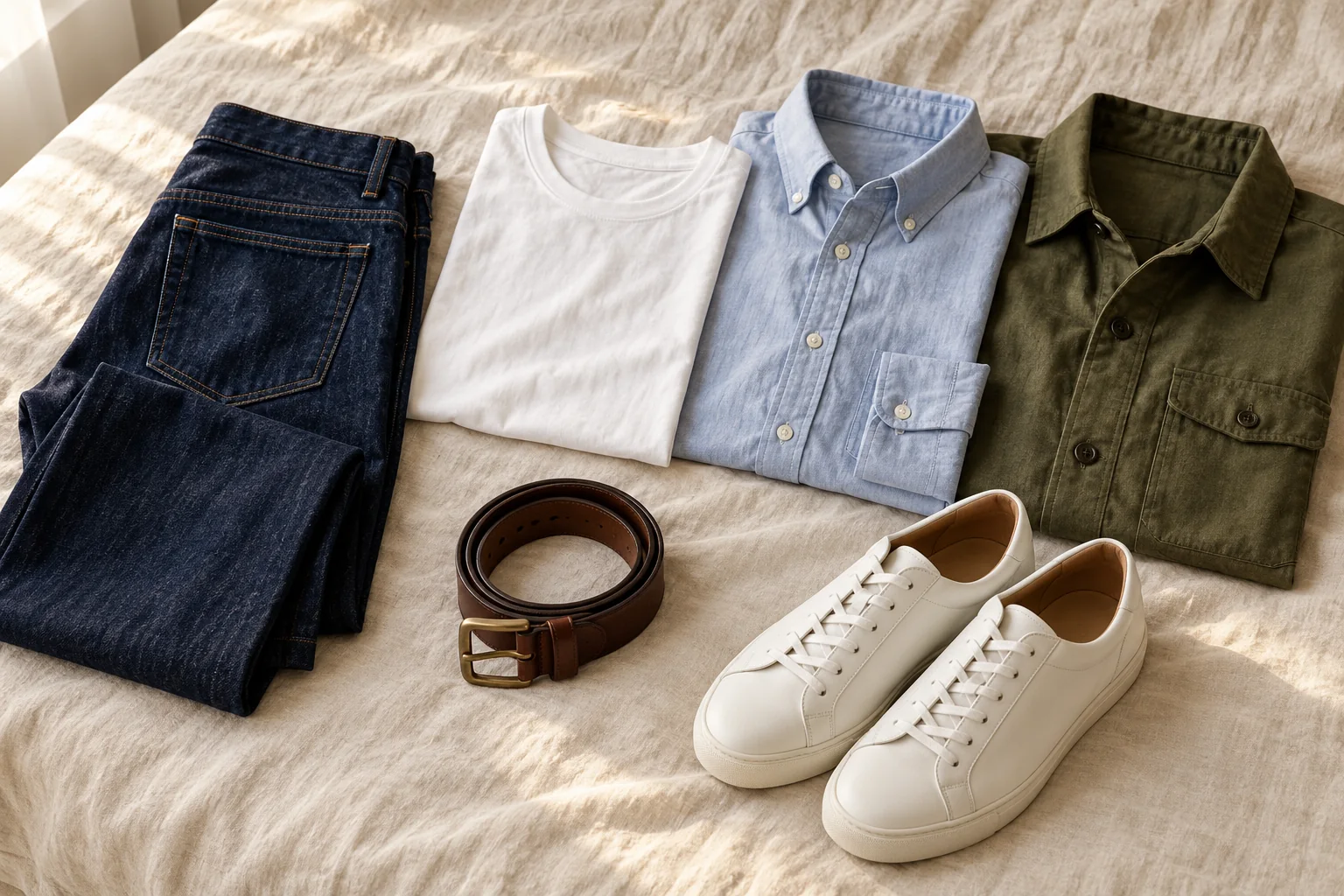
Begin with your actual week
Before buying anything, write down the places you dress for most often: work, travel, dinners, weekends, outdoor errands or events with a dress code. A wardrobe for a remote creative job is not the same as one for a formal office. Identify what you wear repeatedly, what you avoid and what is missing between those two groups.
Pick a base palette
Choose a foundation of two or three neutrals and one or two colors you enjoy wearing. Indigo denim pairs naturally with cream, white, navy, charcoal, olive and brown. This is a guide, not a rule; if your wardrobe already revolves around black, choose a wash and shoe palette that fits it. Repeating colors makes separate items easier to combine.
A useful 12-piece starting point
- One dark or medium-wash everyday jean.
- A second pair in a distinct wash or leg shape if you wear denim often.
- Two clean cotton tees in colors you already use.
- One long-sleeve tee or casual shirt.
- One oxford or relaxed button-front shirt.
- One knit layer, such as a crewneck or cardigan.
- One overshirt or light jacket.
- One weather-appropriate outer layer.
- One clean casual sneaker.
- One more polished shoe or boot.
- A belt that works with the shoes you wear most.
- A simple bag or outer accessory for daily use.
The list is a framework, not a shopping order. Start with the missing pieces that solve repeated problems. If you already own three jackets but lack a shirt that works with both jeans and trousers, another jacket is unlikely to make the wardrobe easier.
Choose the jeans before the supporting pieces
Try the jeans with the shoes and tops already in your closet. Darker denim can read more polished; lighter washes feel more relaxed. Straight and gently tapered cuts can work with many shoe shapes, but your proportions and preferences matter more than a universal "best" fit. Use our fit guide to check rise, seat, thigh and hem.
Buy for repeat wear, then care for the clothes
Cost per wear can be a useful lens, but it should not become a reason to overspend. Consider how often you will reach for a piece, whether it fills a real gap, how it feels after a few hours and whether you can care for it easily. A well-fitting garment you avoid wearing is not a good wardrobe investment.
Give the wardrobe a short review every season. Note which pieces were worn, which needed repair and which were uncomfortable. Replace worn basics as needed rather than rebuilding the whole closet around a new trend. For simple care habits that preserve color and shape, see our denim care routine.
Keep flexibility in the system
Real wardrobes change with seasons, work, travel and personal taste. A capsule should make those changes easier to see, not lock you into a uniform you no longer enjoy. Keep the pieces that earn repeat wear, adjust the gaps and let the rest of your clothing support the life you actually lead.