What stretch changes
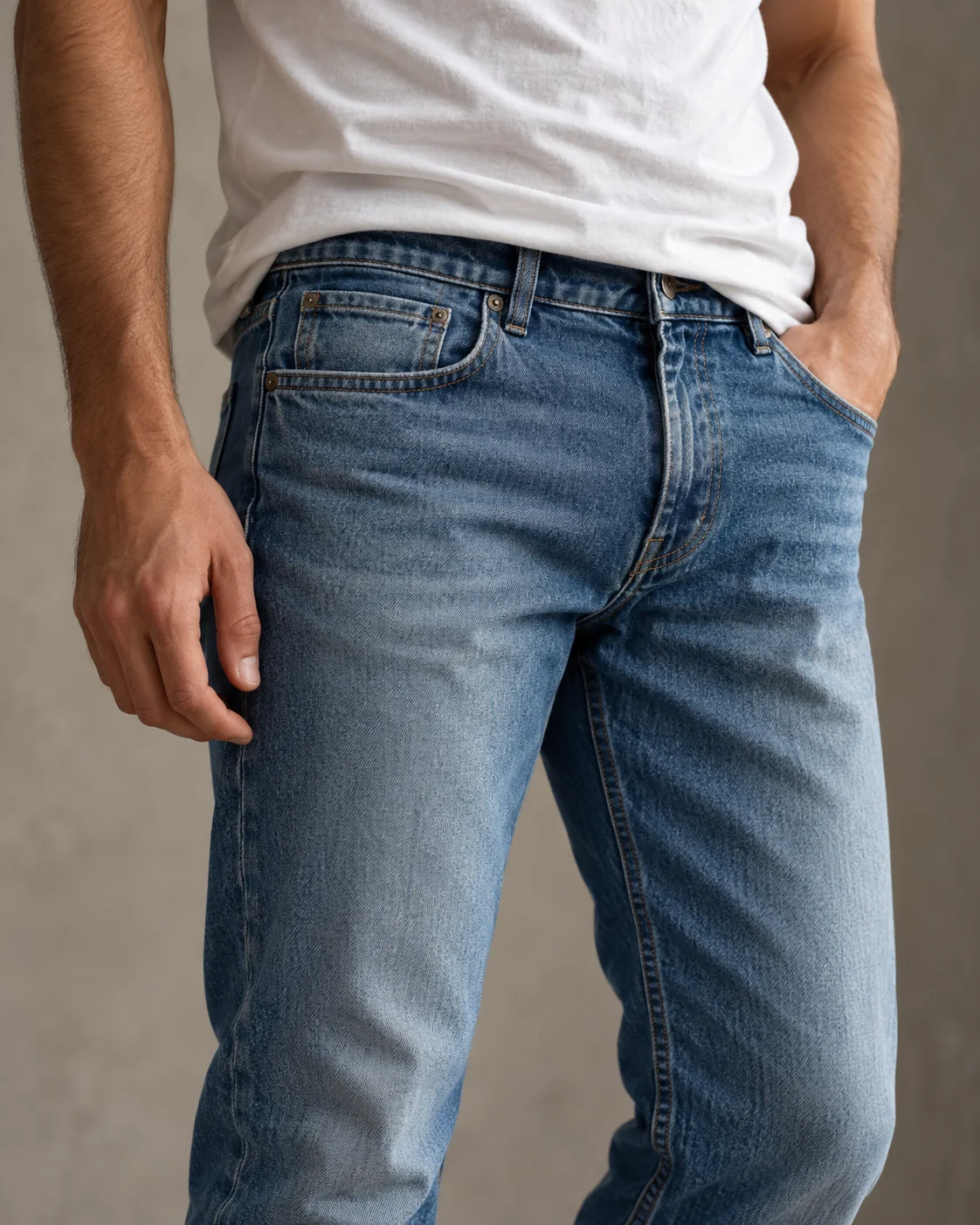
Stretch yarns are blended into denim so the cloth can give when you bend, sit or climb. The amount and type of stretch varies, so the word "stretch" alone does not tell you whether jeans will feel soft, spring back well or lose shape after a day. Fabric composition, denim construction, pattern and finishing all matter.
For long commutes, frequent sitting or days with a lot of movement, some give can feel more forgiving. The tradeoff is that a highly elastic fabric may feel less crisp than a firmer denim. Recovery matters: after pulling gently at the knee or seat, the cloth should return rather than remain bagged out. Product notes and wear testing are more useful than a marketing adjective on its own.
What rigid denim changes
Rigid denim contains no stretch fiber or very little of it. It tends to feel more structured at first and may soften with wear. That break-in period is personal; the cloth should not cause pain, numbness or severe restriction while you wait for it to soften. A good fit can feel secure without forcing the waistband or thigh to do all the work.
Firmer fabric can hold a clean line and may appeal to people who like denim to feel substantial. It can also feel less comfortable if the cut is too narrow, the rise is wrong or the wearer needs more mobility. Do not treat discomfort as proof of quality.
Match fabric to the day
- Desk-to-dinner routine: a moderate amount of stretch can make a close-but-comfortable fit easier to wear through a long seated day.
- Weekend rotation: choose the hand-feel you enjoy most; both stretch and rigid options can work for relaxed outfits.
- Travel: prioritize recovery, temperature and how easily the jeans move when you sit for hours.
- Sharper outfits: look for enough structure to keep the leg line clean, while still allowing a full stride.
Fit can matter more than fiber
Stretch cannot fix an incorrect rise or a tight seat. Rigid denim cannot create a better silhouette simply because it feels heavier. Compare rise, thigh, knee and leg opening alongside the fiber content. If a pair fits well only while standing still, it is probably not the best everyday choice.
Care and longevity
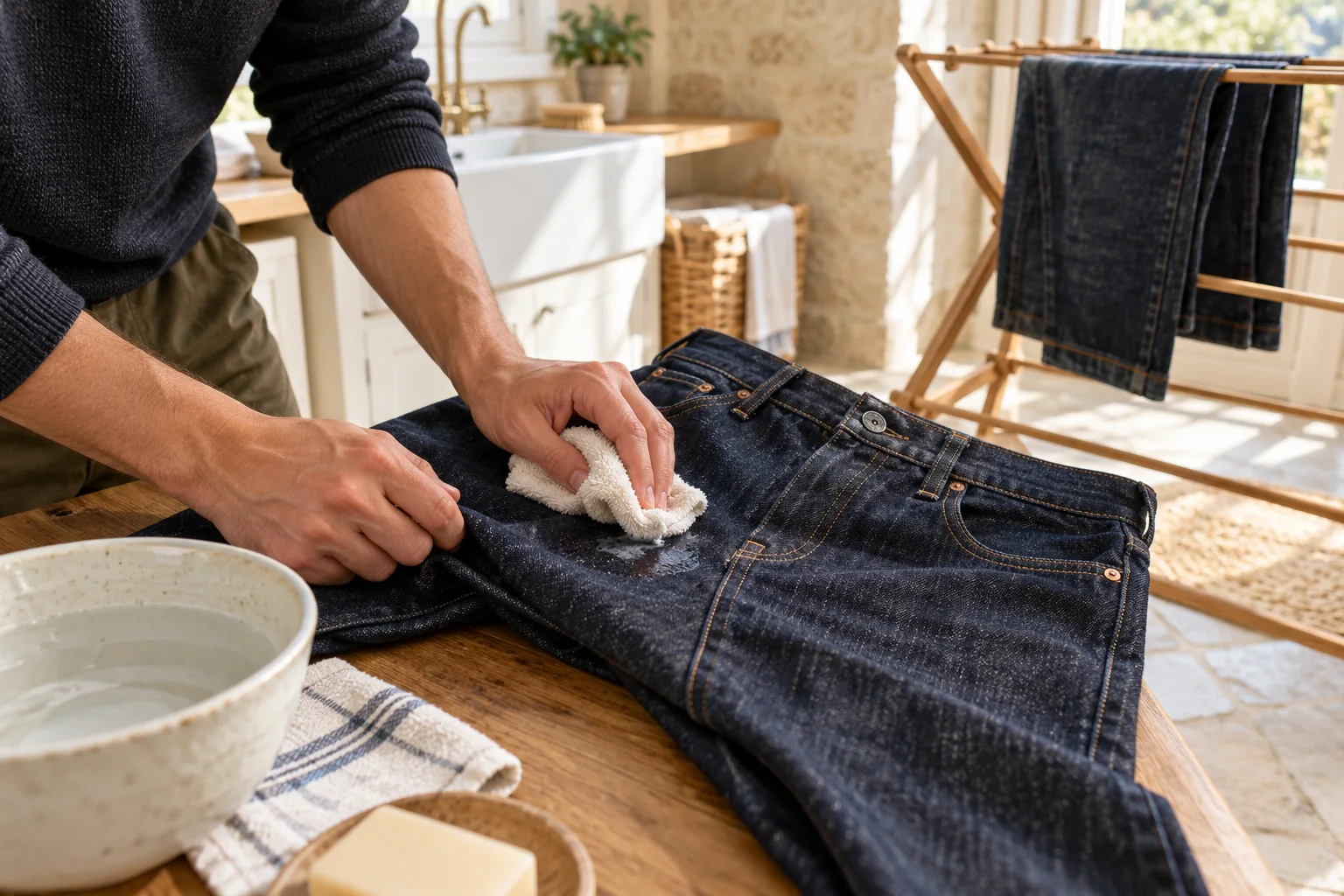
Follow the care label first. Turn jeans inside out, wash only when needed and use a gentle cycle if the label allows it. Avoid excessive heat when drying, since heat can affect color, shrinkage and elastic recovery. For either fabric type, spot cleaning and airing between wears can reduce unnecessary washes.
How to decide
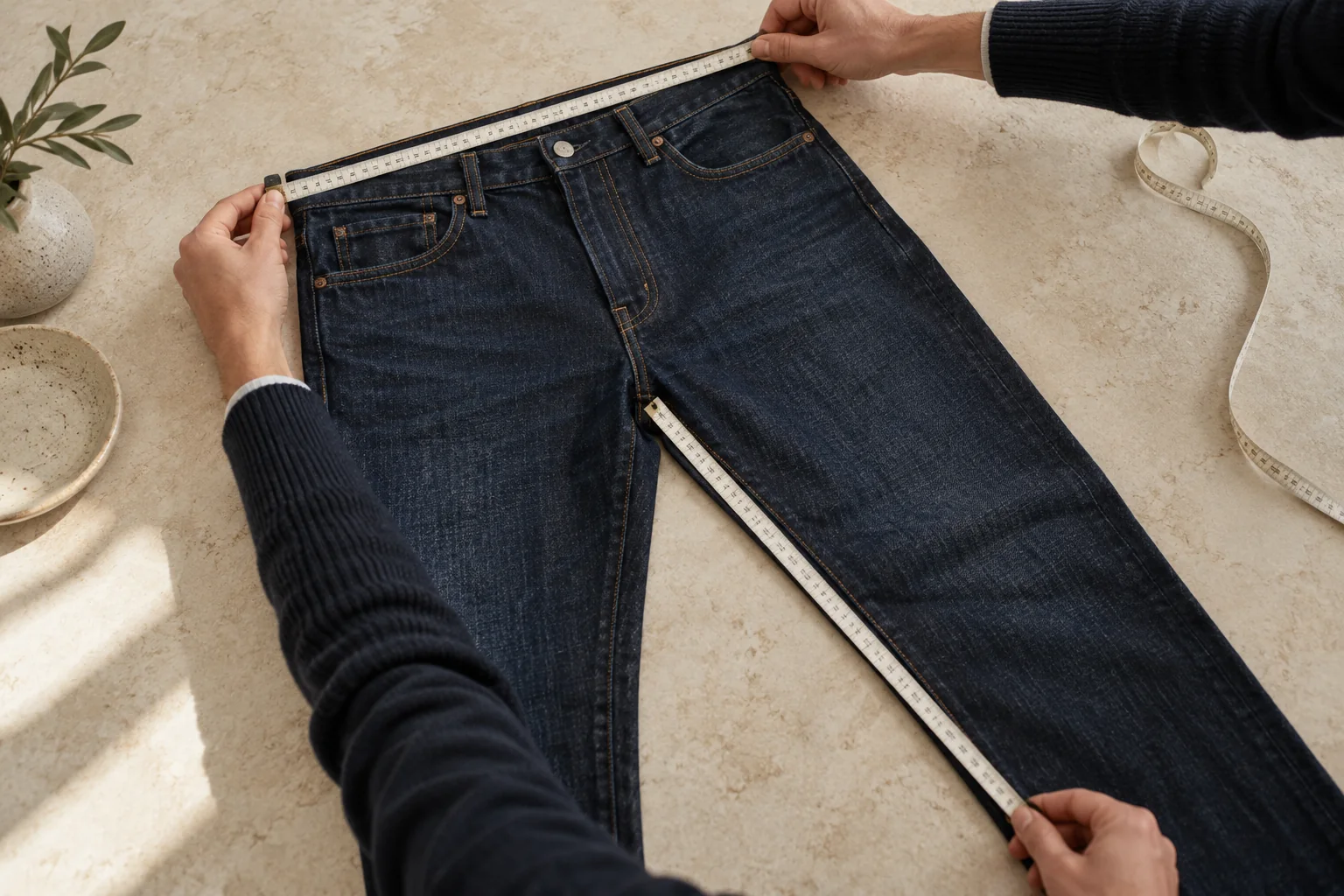
Choose stretch when ease of movement and a softer feel are priorities, but check how well the cloth returns to shape. Choose rigid denim when you prefer a firmer hand and a more structured line, provided the waist and thigh already fit comfortably. If you are between the two, start with a moderate-stretch pair and compare its measurements with denim you already own. Our measuring guide explains which dimensions make that comparison meaningful.