Start with the setting, not the category
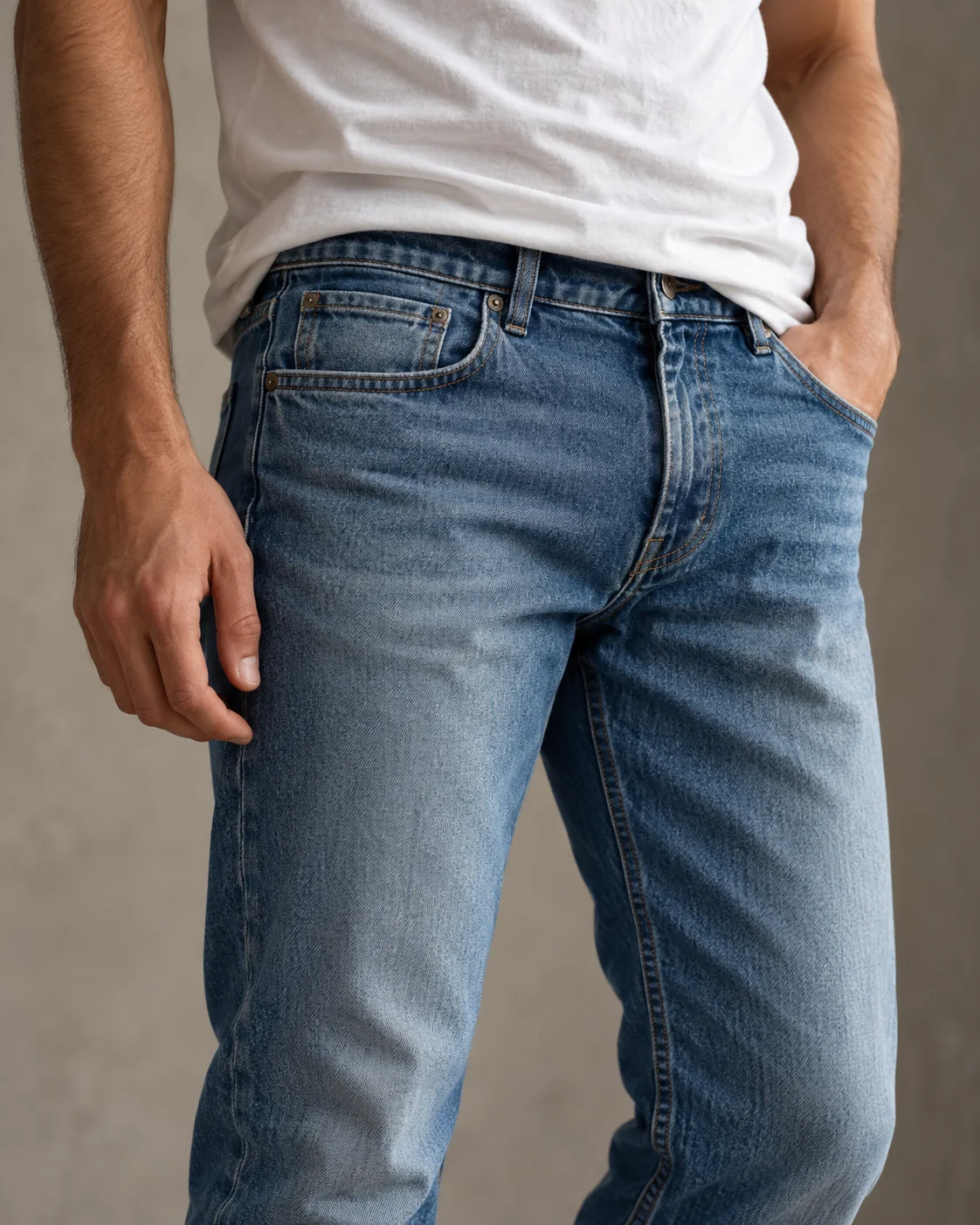
Jeans usually read casual because of their twill construction, visible seams and familiar washes. Dark, clean denim can look more polished than a faded or distressed pair, especially with a plain shirt and tidy shoes. Chinos are often made from lighter cotton twill and may bridge casual and business-casual settings, but a soft, wrinkled chino can look just as relaxed as jeans.
Workplace expectations differ. In one office, dark jeans are normal; in another, chinos are the most casual acceptable option. If you are unsure, pay attention to what people wear in the specific setting or ask. No fabric name can guarantee the right level of formality.
Compare comfort through the whole day
Denim can feel structured, especially when the cloth is firm or the rise is unfamiliar. A little stretch may help with movement, though fiber content alone does not tell the full story; weave, weight, cut and recovery all matter. Chinos often feel lighter, but a slim cut with a low rise can still restrict you. Sit, walk and climb stairs in the exact pair before deciding.
Think about temperature and routine. A lighter chino may feel more comfortable in warm weather, while a heavier jean may suit cooler days. For long travel days, the waistband and thigh room can matter more than whether the product page calls the fabric comfortable. See our travel outfit guide for a movement-first checklist.
Fit still decides whether you will wear them
Look at the rise, seat, thigh and hem in both categories. Chinos are not automatically slim, and jeans are not automatically rugged or roomy. Straight, tapered and relaxed cuts appear across both. Match the leg opening to your shoes: a narrower opening may work with low-profile sneakers, while a straighter hem can sit more naturally over boots.
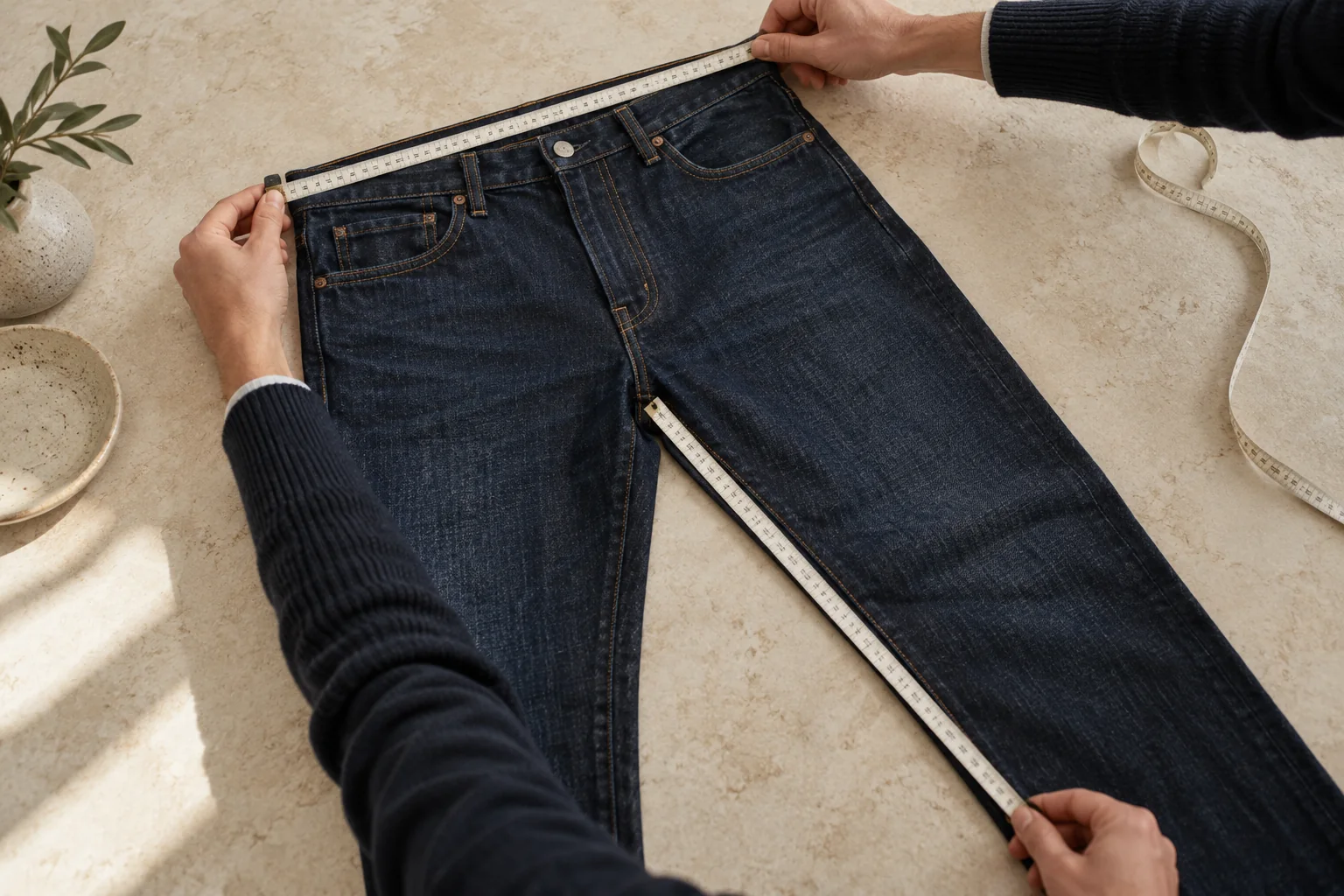
For online purchases, compare garment measurements with a pair you already like. Use the same measurement points for both products and leave enough ease for sitting. Our jeans measurement guide explains how to take a flat reference measurement without confusing it with a body measurement.
Build outfits from what you own
Dark jeans work with a white Oxford shirt, a knit or an overshirt. Chinos in navy, olive, tan or charcoal can work with tees, button-front shirts and light jackets. Your current shoes help narrow the choice: try the garment with the footwear you use most instead of imagining an entirely new outfit around it.
A practical two-pair rotation might be one dark jean and one chino in a different color. That creates a clear choice without duplicating the same role. If you wear denim nearly every day, a second wash or leg shape may be more useful than adding chinos. If your work or social settings call for a slightly cleaner line, chinos may close a gap your jeans cannot.
Consider care and total cost
Check the care label. Some chinos may wrinkle more readily and benefit from careful drying or ironing. Denim often needs less frequent washing, but its care routine still depends on fabric, color and how it is worn. Do not choose an item based only on a claim that it is low maintenance; consider the routine you are willing to follow.
Compare the delivered price, return terms and tailoring needs. A pair that fits the waist but requires significant adjustment may not be a better value. A discounted garment is not useful if it never leaves the closet.
For a broader wardrobe plan, use our capsule wardrobe checklist and choose the bottoms that work with more of your existing tops and shoes.