Choose the neckline for how you dress
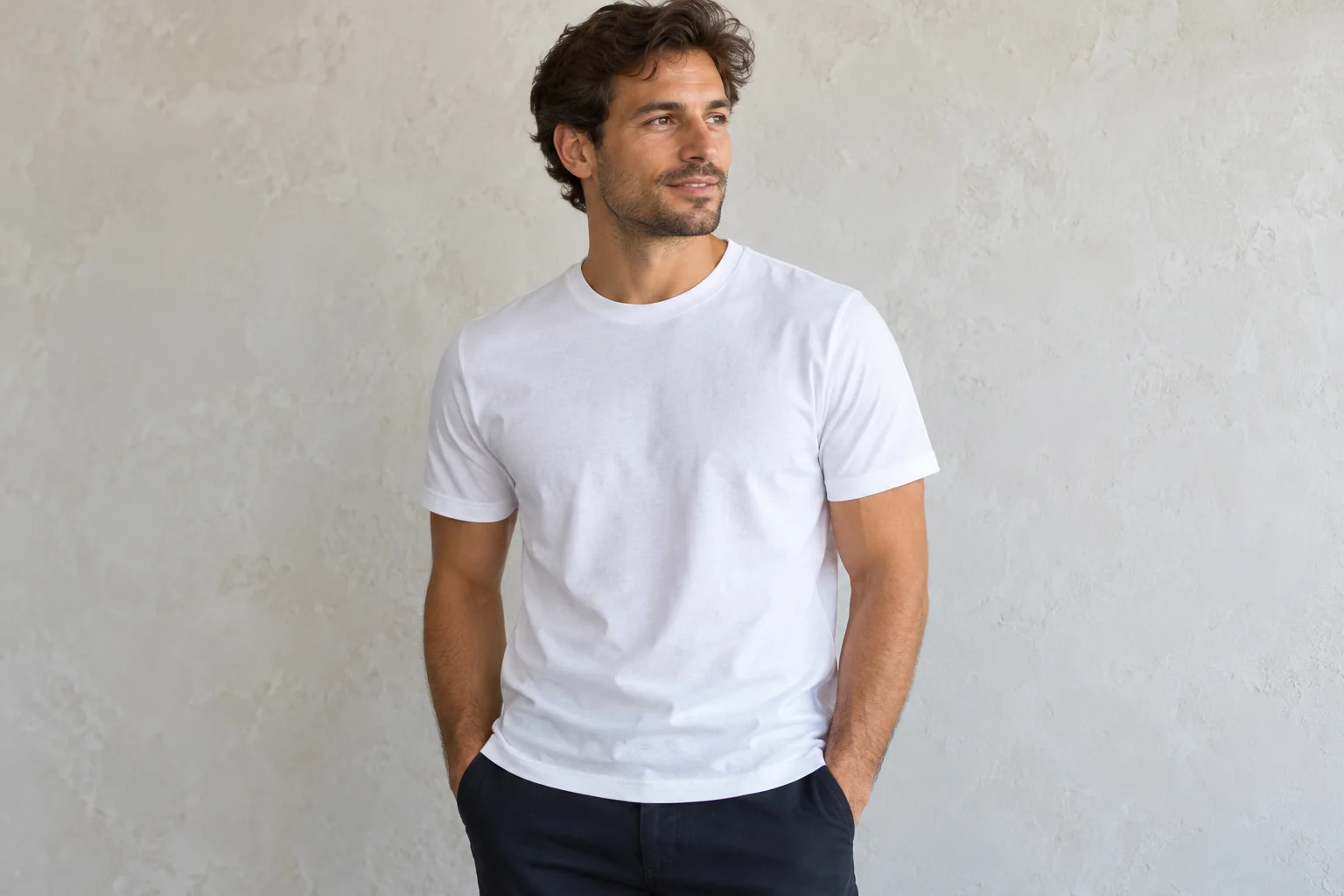
A crew neck is a familiar starting point and works under many casual layers. A wider or lower crew can feel more relaxed, while a tighter rib may sit neatly beneath an overshirt. A V-neck can be useful when you want less fabric visible beneath an open collar, but the depth changes how it reads. There is no universal best neckline; the useful test is whether you like it both alone and under the layers you already own.
Use shoulder and sleeve as the first fit signals
On a conventional cut, the shoulder seam should sit close to the edge of your shoulder. A dropped shoulder can be a deliberate relaxed design; it should look balanced, not simply oversized. The sleeve should cover a comfortable amount of the upper arm without gripping. A very short sleeve can make a tee feel sporty; a longer sleeve may look more relaxed. Try moving your arms and reaching forward before judging.
Check the chest and body for ease. The fabric should skim rather than cling or hang like a box unless that is the intended style. Horizontal pulling across the chest or underarm often signals too little room. Excess fabric at the waist may signal a different cut is needed rather than a smaller size overall.
Think about length and use
A tee worn untucked usually looks balanced when the hem lands around the middle of the fly or just below the waistband, though torso length and rise change the result. If you plan to tuck it, extra length helps it stay in place. Try the shirt with your regular jeans and chinos instead of assessing it against one pair of unfamiliar trousers.
Read fabric details without guessing quality
Fiber content, weight and knit construction are clues, not a complete quality score. A heavier tee may drape more firmly and feel substantial; a lighter one may layer easily in warm weather. Cotton blends can change stretch, drying and surface feel. Product pages may describe fabric as soft or premium, but those words are subjective. Look for clear composition, care instructions and close-up photos, then use a return policy if the hand feel is central to your decision.
Opaque color, even seams and a neckline that lies flat can be helpful observations, but a product image cannot confirm how a shirt will hold its shape after repeated washing. Avoid treating one fabric weight or country-of-origin label as proof that a garment will last longer.
Three outfits, one useful tee
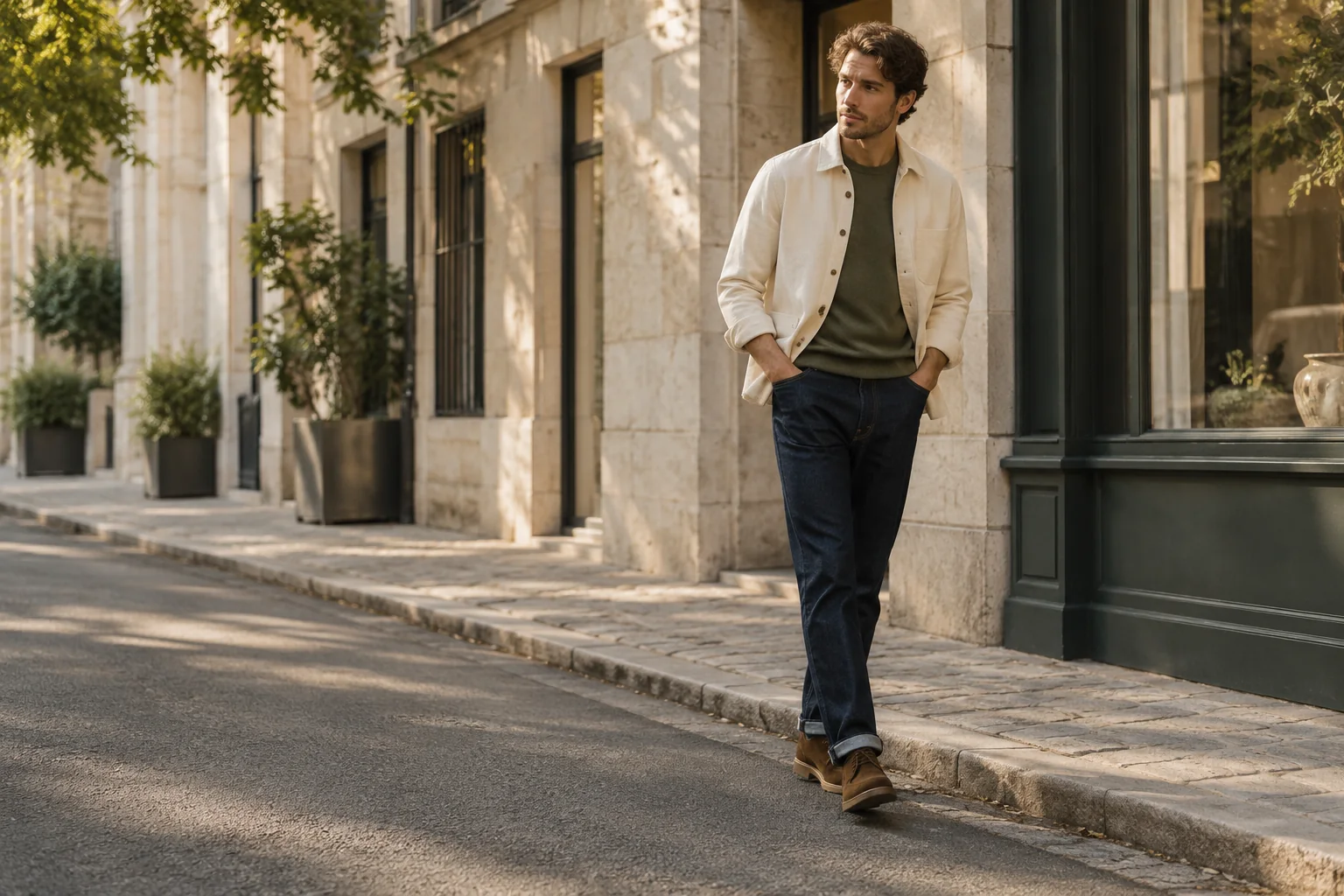
- Wear a clean white or ecru tee with dark denim and a casual shoe.
- Use a neutral tee as a base beneath an open Oxford shirt or overshirt.
- Pair a dark tee with chinos and a simple jacket for an uncomplicated evening outfit.
Keep the rest of the outfit aligned to the tee's fit. A close-cut shirt can look deliberate with a straighter trouser; a boxier tee may balance a relaxed leg. The proportions are more convincing when one piece is not dramatically tighter than every other piece.
Wash and store it with a little care
Follow the label, wash similar colors together and avoid unnecessary high heat. Turning a printed or dark tee inside out may reduce direct abrasion. Remove it promptly from the dryer or line dry if you want to limit heat exposure and creasing. If the neckline twists or the hem skews after washing, compare the care routine and construction before deciding whether another size would solve it.
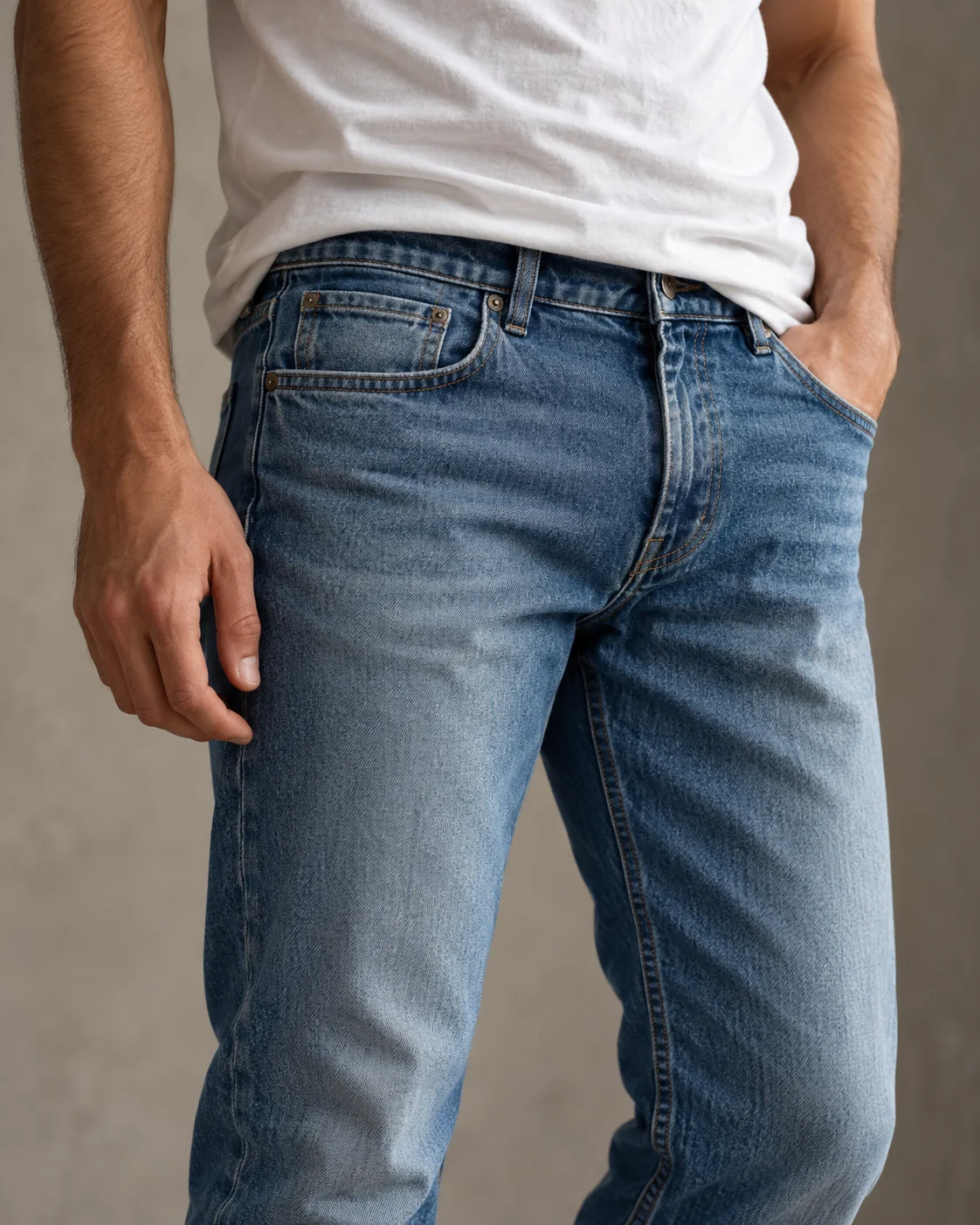
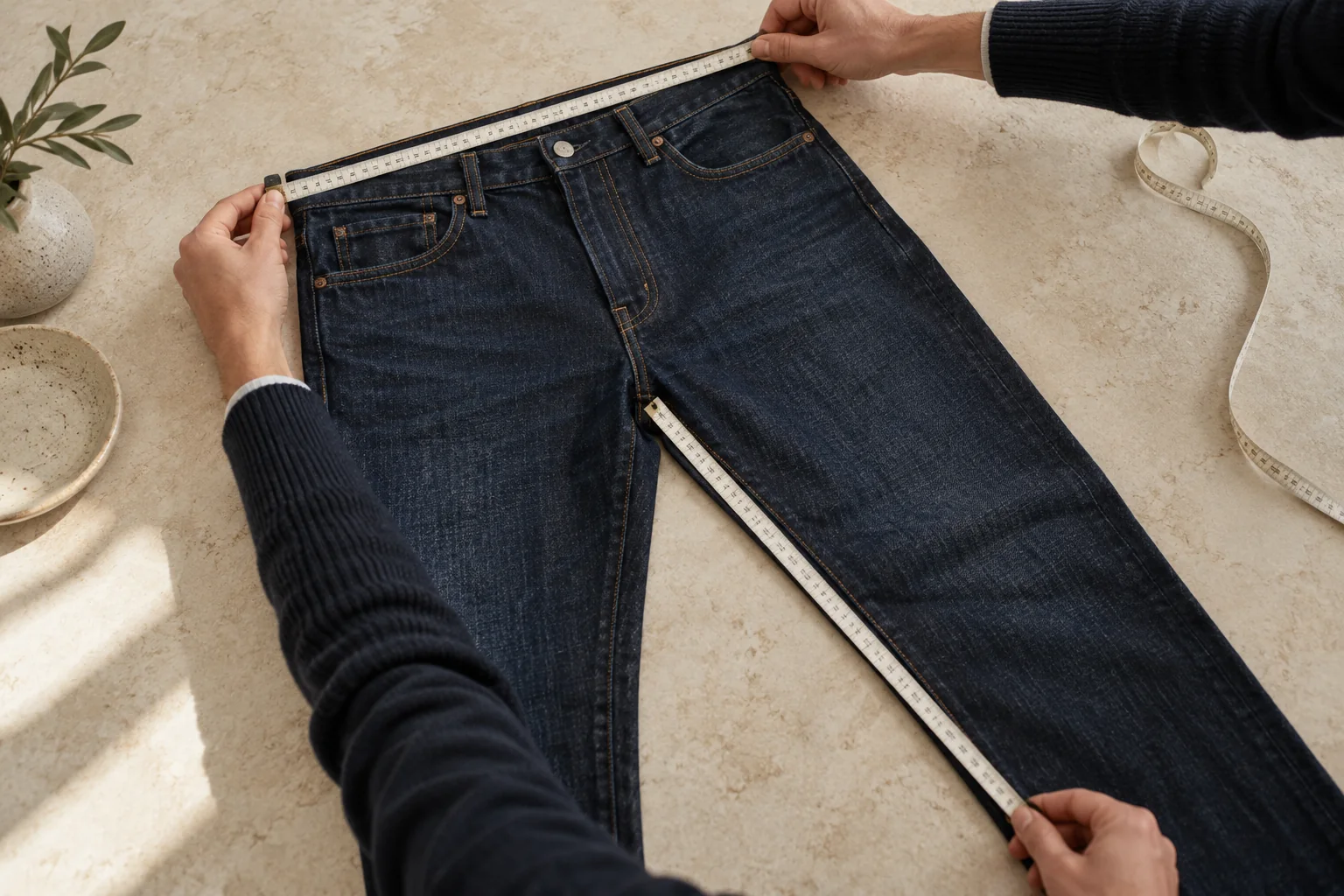
A good basic should make other clothes easier to wear. Pair it with jeans that pass our fit checklist and layer it with an overshirt chosen for the right weight.