Decide what job it needs to do
Start with the layer you expect to wear beneath it. A piece worn over a tee can have a closer, shirt-like fit. One intended to sit over a knit or sweatshirt needs extra room across the chest, upper back and armholes. Trying to make one garment serve both roles can leave it either restrictive over a sweater or overly loose over a thin base layer. Think about your most common use first, then decide whether a second weight is genuinely useful.
Overshirts are not automatically outerwear. A light cotton style can tidy up an indoor outfit but may offer little protection in wind or rain. A lined or heavier version can function as a light jacket in mild weather. Check the construction, lining, closure and fabric description instead of assuming that a product category tells you how warm it will be.
Check the shoulder, sleeve and length
The shoulder seam should either sit close to your natural shoulder or be intentionally dropped; an accidental in-between position can make the garment look poorly sized. Button it over the layer you plan to wear. Reach forward, lift your arms and sit down. The back should not pull sharply, and the armholes should allow movement without the whole hem lifting excessively.
Length changes the proportion of an outfit. A shorter overshirt can work well with mid- or higher-rise trousers; a longer cut can feel more relaxed over straight jeans. The hem usually looks balanced around the hip, but body proportions and intended styling matter more than a fixed rule. If you will wear it open, look at the full vertical line with your usual tee and trousers.
Match the fabric to the season
Light cotton, brushed twill and chambray can be comfortable for indoor layering and mild days. Denim and canvas tend to feel more structured. Wool blends and lined cloth may extend the useful season, though warmth depends on fabric weight and the layer underneath. Product pages do not always state weight, so construction photos and care labels can help you understand what is actually being sold. If the details remain unclear, treat the garment as an uncertain purchase rather than assuming a performance it may not deliver.
Build outfits around one clear texture
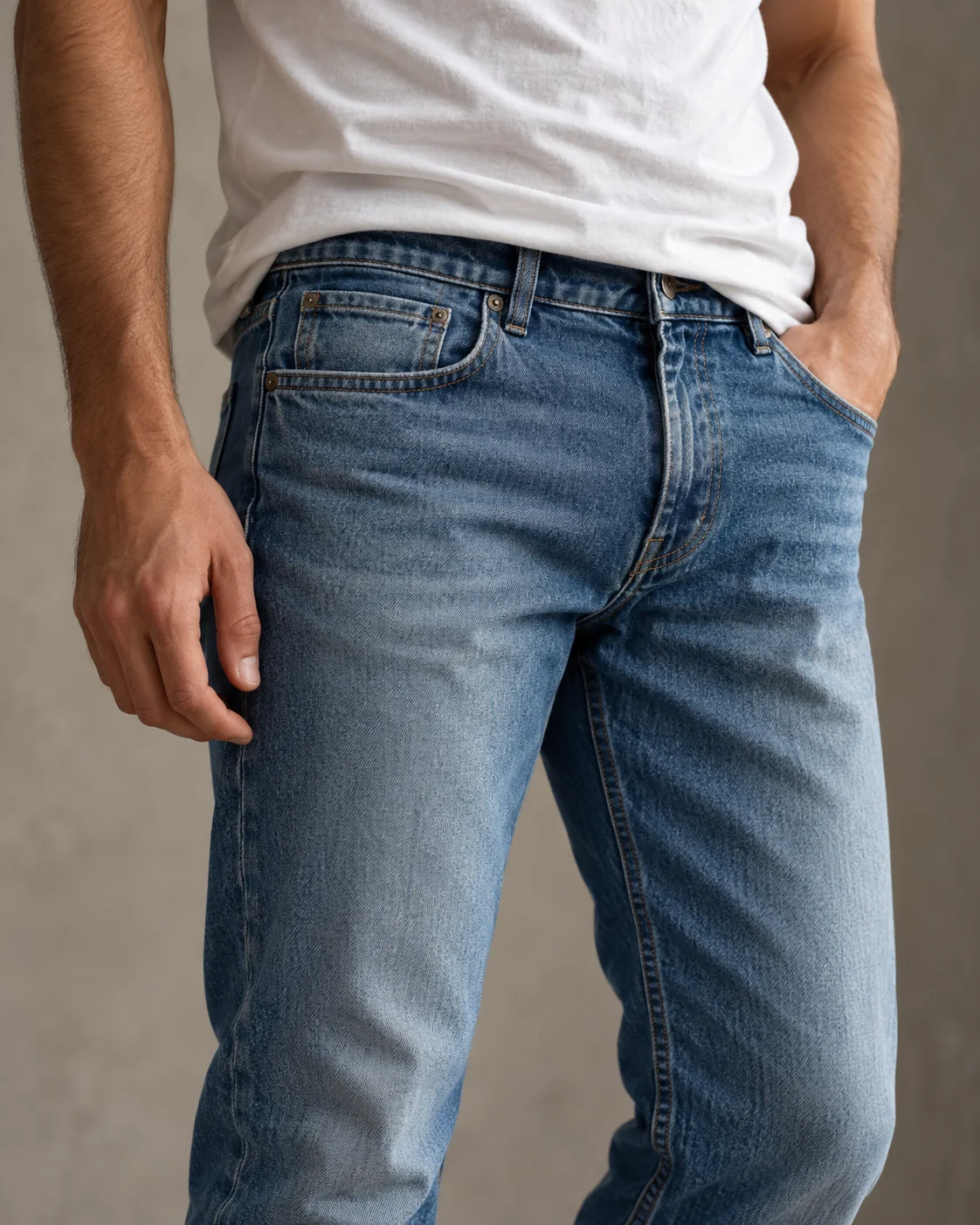
For a simple everyday combination, wear a solid tee, a midweight overshirt, straight jeans and clean sneakers. For a quieter smart-casual look, try a fine knit under a plain overshirt with dark denim and a leather shoe. A textured overshirt already adds visual interest; keeping the other pieces calm lets it do the work without making the outfit busy.
Color is a practical starting point. Olive, navy, charcoal, tan and washed blue can connect naturally to denim and neutral basics. If the overshirt is patterned, keep the base layer simple. If it is solid, vary texture through denim, knitwear or footwear rather than introducing several competing patterns.
Use a short purchase checklist
- Will it fit over the layer you will actually wear?
- Does the shoulder and sleeve still move comfortably when buttoned?
- Is the fabric appropriate for the temperatures and settings you have in mind?
- Does the length work with your rise and usual footwear?
- Can you wash or care for it using a routine you are willing to follow?
Care and repeat wear
Follow the care label, especially for lined, wool-blend or heavily structured garments. Airing between wears can help a lightly used layer feel fresh, while spot cleaning can address a small mark without a full wash. Avoid overloading a washer or dryer; unnecessary heat can affect fit and surface texture. A good overshirt should be easy enough to reach for often, not so precious that it stays on a hanger.
For a complete outfit system, start with our denim-centered capsule wardrobe guide and fit guide. Together, they help you choose the supporting layer around clothes you already wear.