Take an honest inventory
For two weeks, notice what you reach for and what stays untouched. Record the settings you dress for, the weather, the shoes you use and any repeated frustration: jeans that pinch when seated, shirts that never stay tucked or a jacket that is too warm indoors. This evidence is more useful than a generic list of essentials because it reflects your own week.
Sort your clothes into three groups: regular wear, occasional wear and pieces that no longer work. The last group may need repair, alteration, donation or responsible disposal depending on condition and local options. Do not discard a useful garment just to make a closet look minimal.
Identify the role before the item
Translate a gap into a job. “I need a layer for a cool office” is more precise than “I need a new jacket.” “I need a dark bottom that works with two shirts and my boots” is more useful than “I should buy premium jeans.” A clear role limits impulse purchases and gives you a way to judge whether the item succeeded.
Evaluate fit, fabric and information together
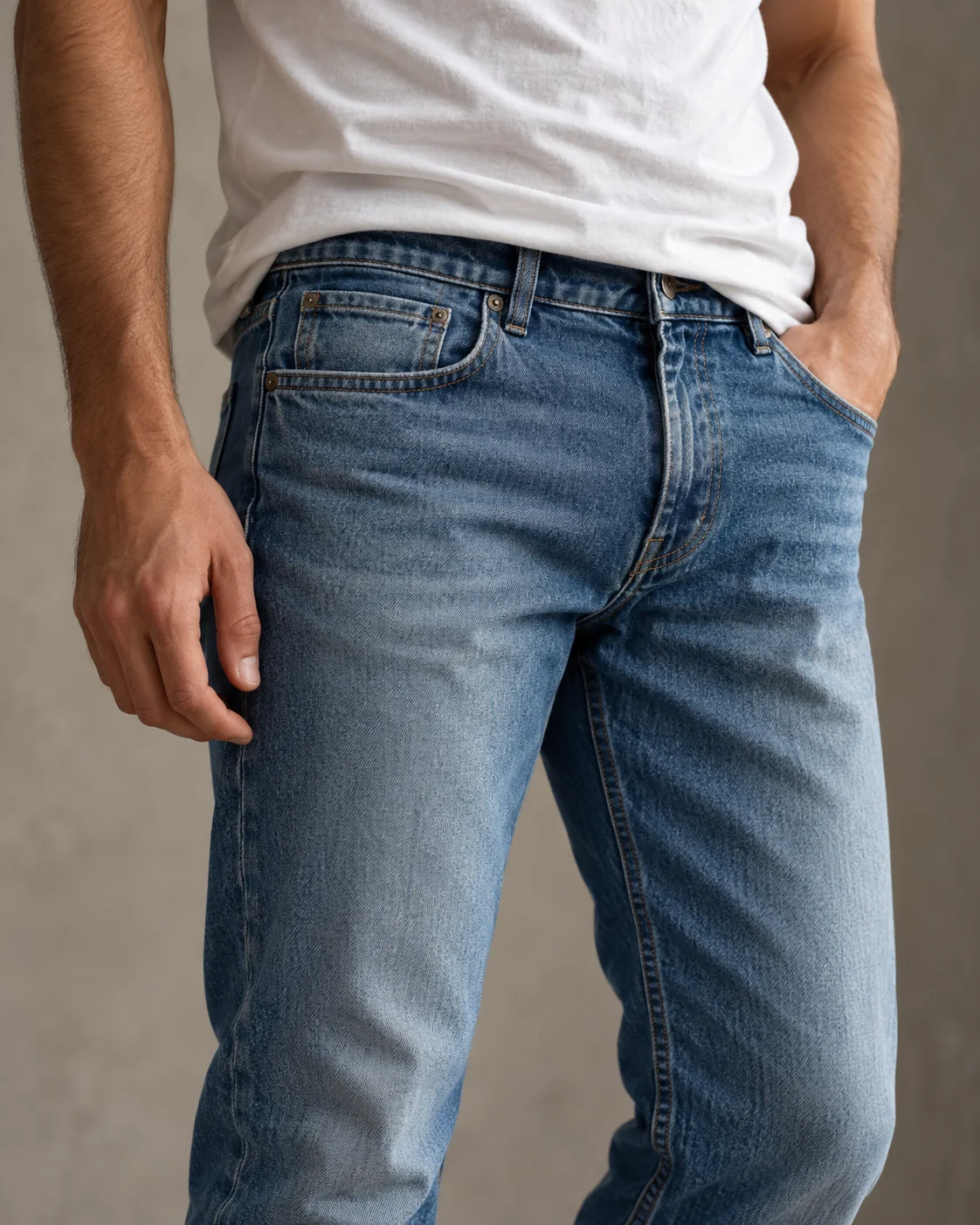
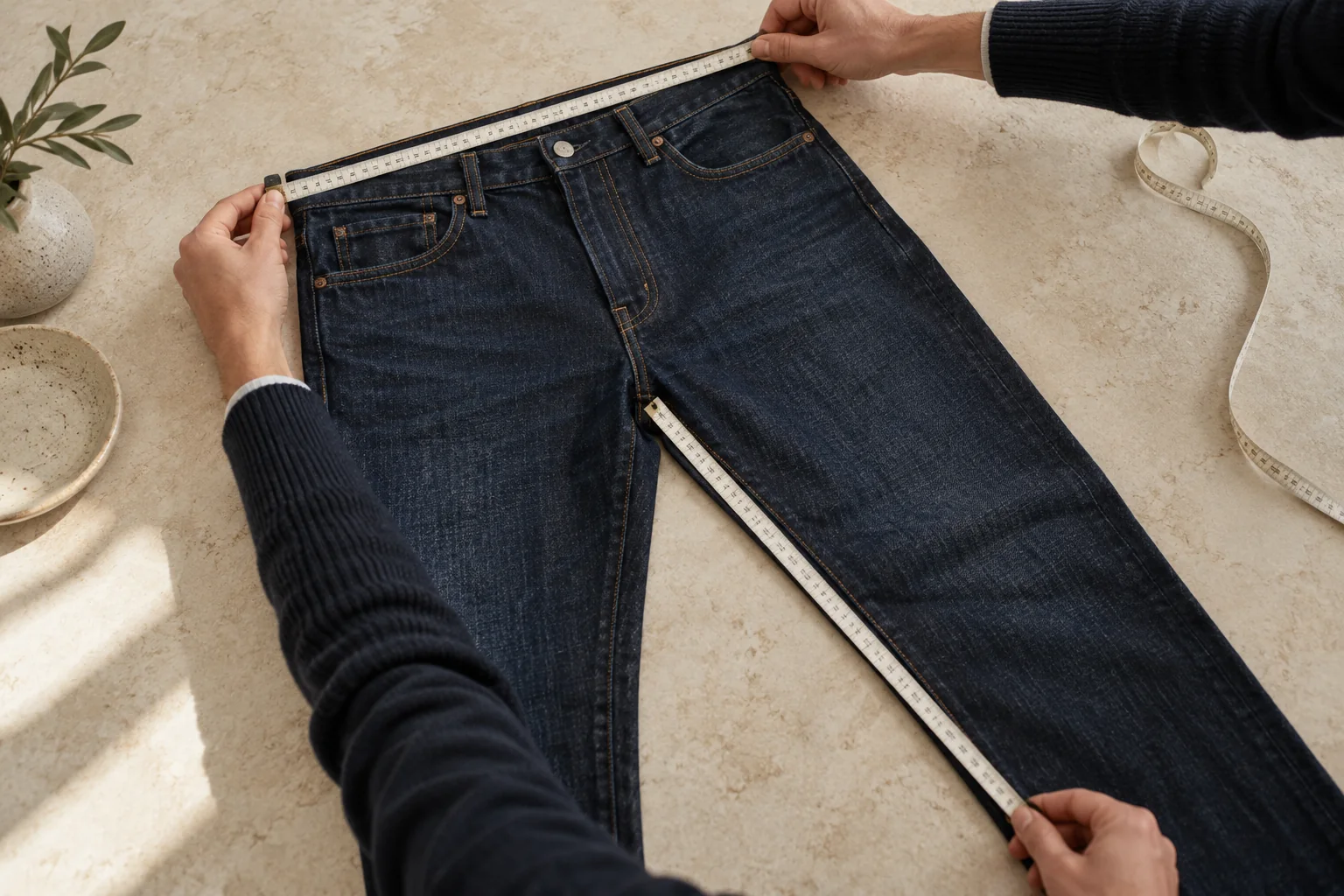
Try the garment in movement. Check the parts that affect comfort—waist, shoulder, thigh, sleeve and length—then look at fiber composition, care, construction and return terms. A product description may use broad words like durable, premium or sustainable. Look for specific information behind the claim and be willing to record what remains unknown.
No single indicator proves that a garment will last. Stitching, fabric, hardware, pattern alignment, care and frequency of use all contribute, and a product photo cannot show everything. Reviews can surface recurring issues but may describe another version or fit preference. Treat them as evidence to weigh, not a guarantee.
Build combinations rather than isolated purchases
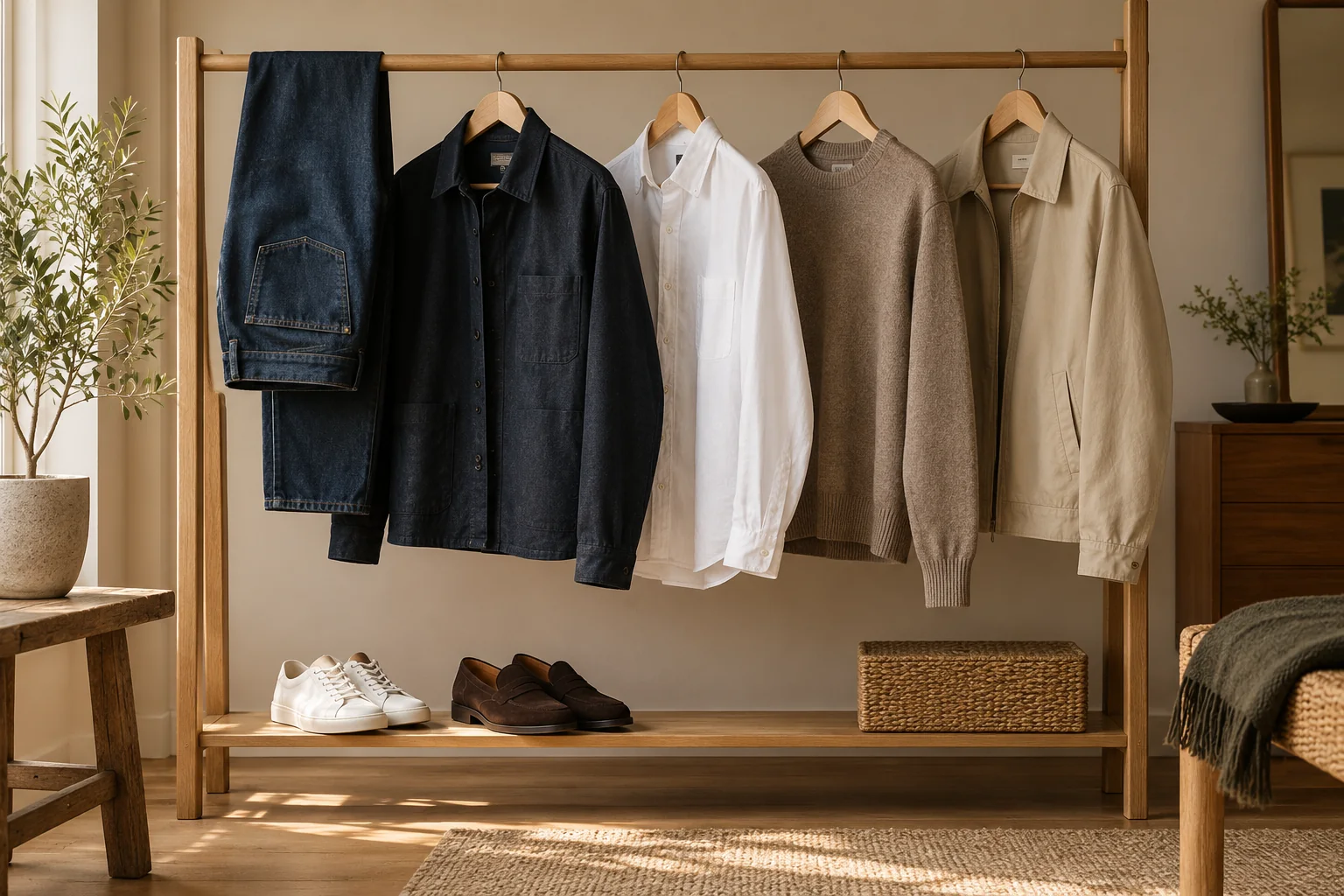
Choose a small color palette that fits what you already own. Indigo, navy, cream, gray, olive and brown are common starting points, but personal taste matters. Before buying, combine the new piece with at least three tops, bottoms or layers you already use. If it only works with one imagined outfit, consider whether it is filling a real need.
A practical base might include a comfortable pair of jeans, a second bottom for a different setting, two shirts, a few tees, a knit or overshirt, a weather-appropriate jacket and shoes that cover your usual activities. The list should change with climate, work and personal style. Use our denim-centered capsule guide as a framework, not a required shopping plan.
Use cost-per-wear carefully
Cost-per-wear can help compare two garments if you have a realistic estimate of how often each will be worn. It should not be used to justify an expensive purchase by assuming years of use before you have tested the fit or care routine. Price, repairability, comfort, service and how often the item matches your actual life all matter.
Maintain what earns its place
Follow garment labels, air outer layers when appropriate, treat stains early and repair small issues. Review the closet seasonally and note what was genuinely useful. Replacing a worn basic with a better-fitting version can be more valuable than adding a trendy item that solves no recurring problem.
Keep the system flexible
A wardrobe should adapt as your work, body, weather and preferences change. There is no final capsule and no obligation to buy a particular number of pieces. Keep what serves you, revise what does not and use reliable fit notes to make the next decision easier. The goal is a closet that supports your life, not a closet that becomes another standard to meet.