Choose a useful reference garment
Start with a clean garment you already wear comfortably in a similar fabric and silhouette. A relaxed cotton shirt is not a reliable reference for a fitted stretch shirt; a pair of high-rise rigid jeans is not a direct match for low-rise stretch denim. If you can, choose a piece from the same category and intended use.
Lay the garment flat on a hard surface, smooth it gently without stretching, and use a flexible tape. Record the date and the garment label so you can compare future purchases. Measurements taken by a different method may not be comparable, so consistency matters more than an extra decimal place.
Measure tops at consistent points
- Chest width: lay the top flat and measure from one side seam to the other under the armholes. Double the result only if you need an approximate garment circumference.
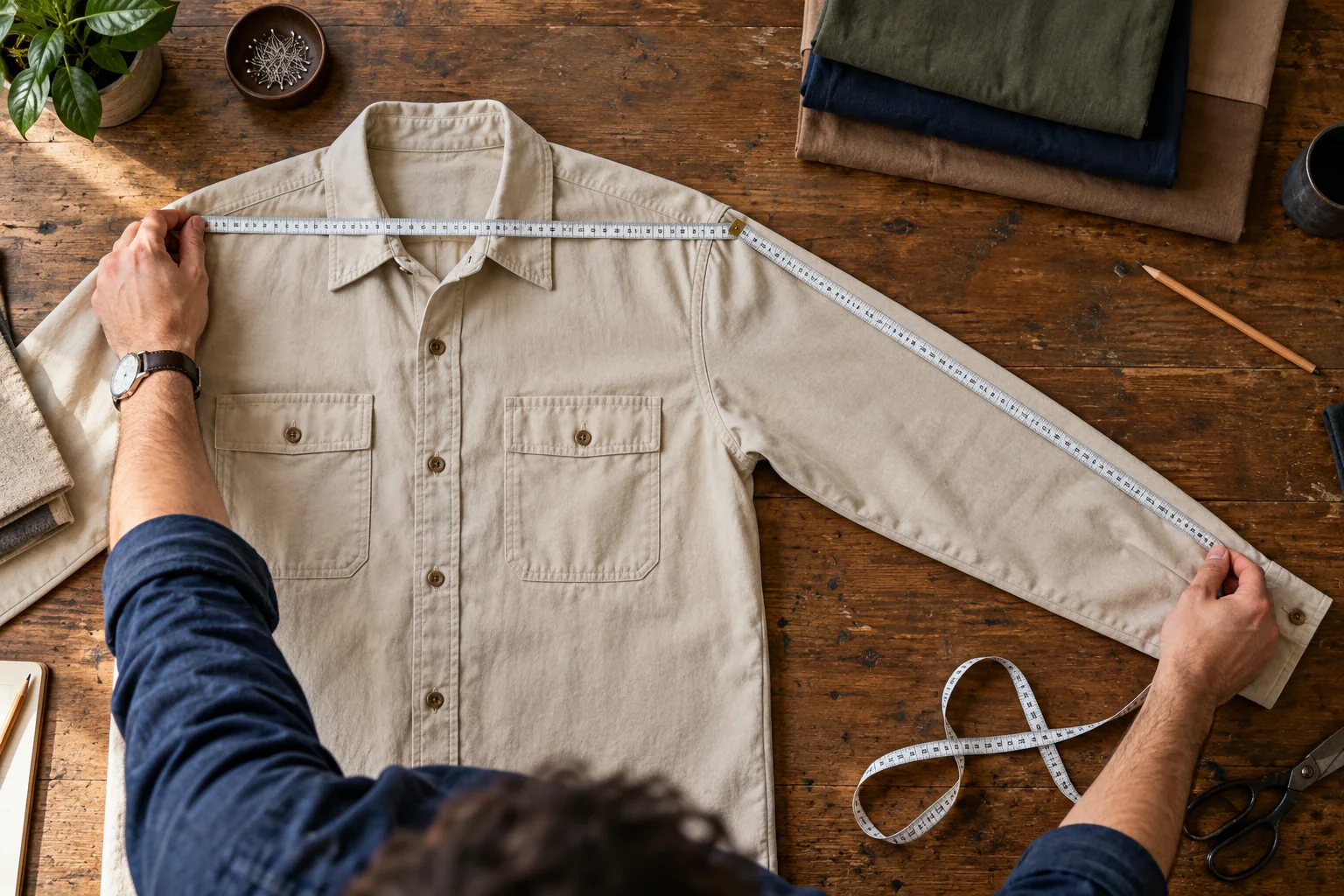
- Shoulder: measure across the back from shoulder seam to shoulder seam when seams are visible.
- Sleeve: measure from the shoulder seam to the cuff along the outer edge; raglan sleeves need a different method.
- Body length: measure from the high point of the shoulder beside the collar to the hem.
Some retailers measure chest at a different height or list body circumference instead of flat garment width. Read the diagram or measurement notes. If they do not say how a number was taken, contact support rather than assuming.
Measure trousers without pulling the fabric
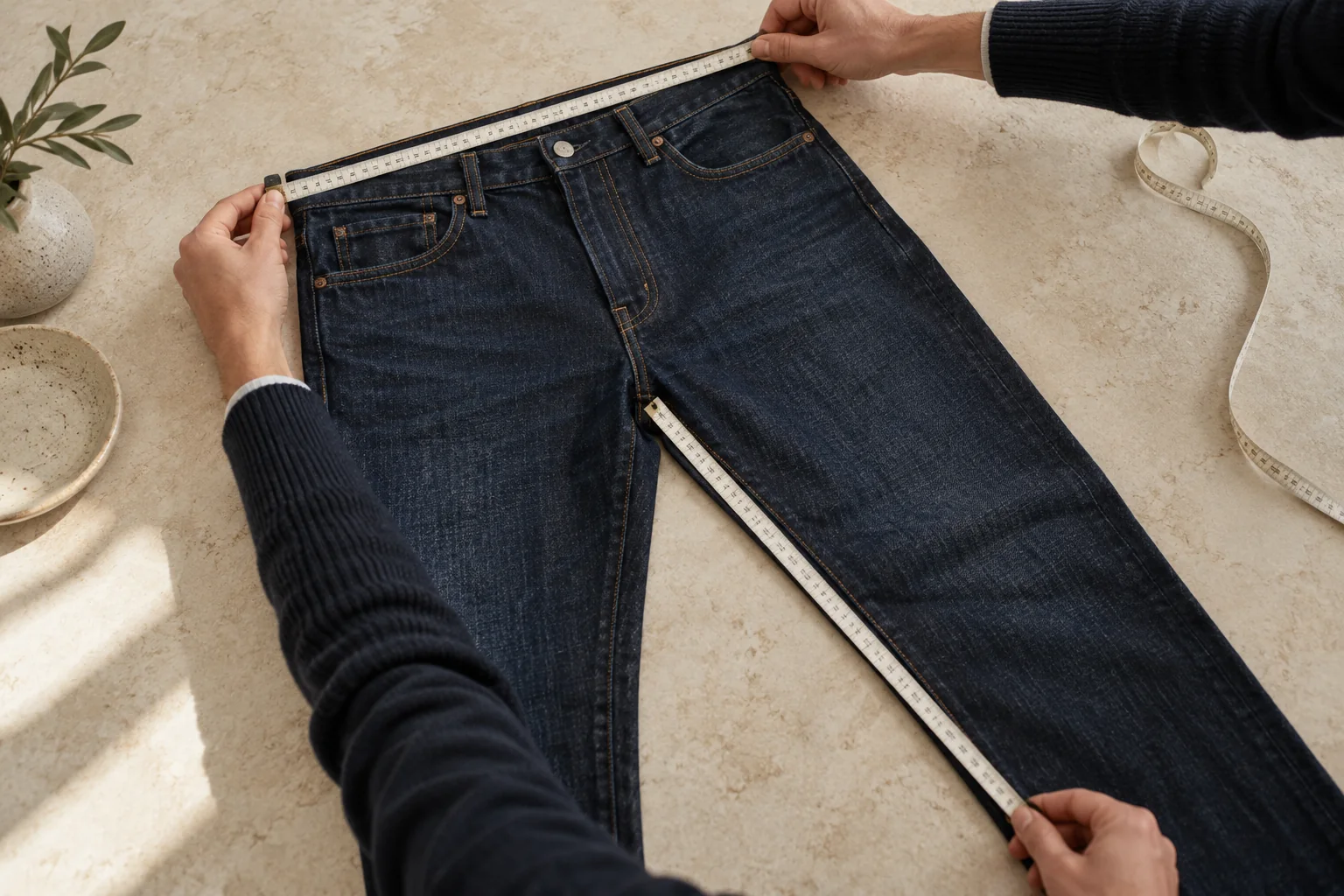
- Waistband: fasten the garment and measure straight across from edge to edge. Do not stretch elastic or pull a rigid waistband taut.
- Front rise: measure from the crotch seam to the top of the front waistband along the seam.
- Thigh: measure across the leg a consistent short distance below the crotch, following the retailer's diagram if available.
- Inseam: measure from the crotch seam to the hem along the inside leg.
- Leg opening: measure straight across the hem.
A flat waistband measurement is not the same as a body waist measurement. Doubling it gives a rough garment circumference, but the body needs ease and different fabrics behave differently. Do not choose a size by matching one number while ignoring rise, thigh and intended fit.
Compare chart definitions before numbers
Check whether the brand lists body measurements, finished garment measurements or a fit model's measurements. A body chart tells you which size the brand recommends for a body range; a garment chart describes the item itself. A measurement chart may also refer to a sample size, with grading between sizes. The retailer should explain the method, but if it does not, uncertainty remains.
Fit labels such as slim, regular and relaxed are not standardized. Compare the exact style, fabric and cut you want. For jeans, see our separate jeans measurement guide and fit breakdown.
Leave room for movement and personal preference
Measurements are a starting point, not an instruction to reproduce the reference garment exactly. You may prefer more room in the thigh, a shorter sleeve or a higher rise. Fabric stretch, lining and construction change how close a garment can sit while remaining comfortable. Compare several measurements and decide which ones matter most for the item.
Keep a small measurement record
After finding a fit you like, record the garment's measurements, the brand, exact style, size, fabric and how it feels after a full day. Over time, this gives you a practical reference for repeat purchases. A short note such as “comfortable at waist; slightly narrow at thigh” is more useful than a size label alone.
For a first-time brand purchase, look at the specific product page and use the return window as part of the decision. A careful measurement process improves your odds, but it cannot replace trying the actual garment.