Compare the garment, not the slogan
Brand language can tell you what a company wants to emphasize; it cannot guarantee how a particular pair will fit. Product pages may describe comfort, durability, stretch or craftsmanship, but those words need to be considered alongside garment measurements, composition and construction details. Save the exact style names when you compare so you do not confuse one model with an entire brand.
Use the same seven criteria for every pair
- Rise: where the waistband sits and whether it remains comfortable when seated.
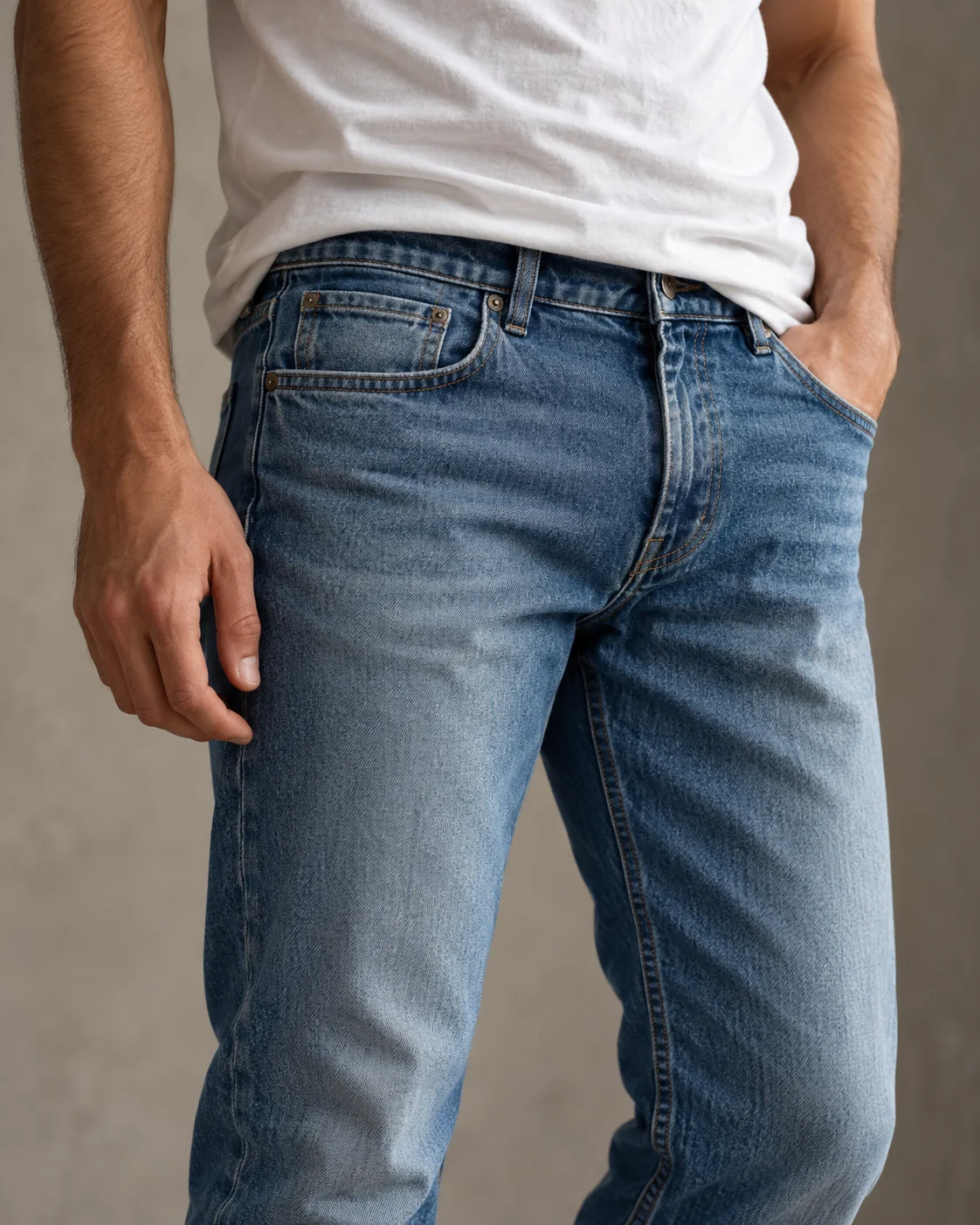
- Seat and thigh: how much room you need for movement and the silhouette you prefer.
- Leg and hem: whether the shape works with your regular shoes.
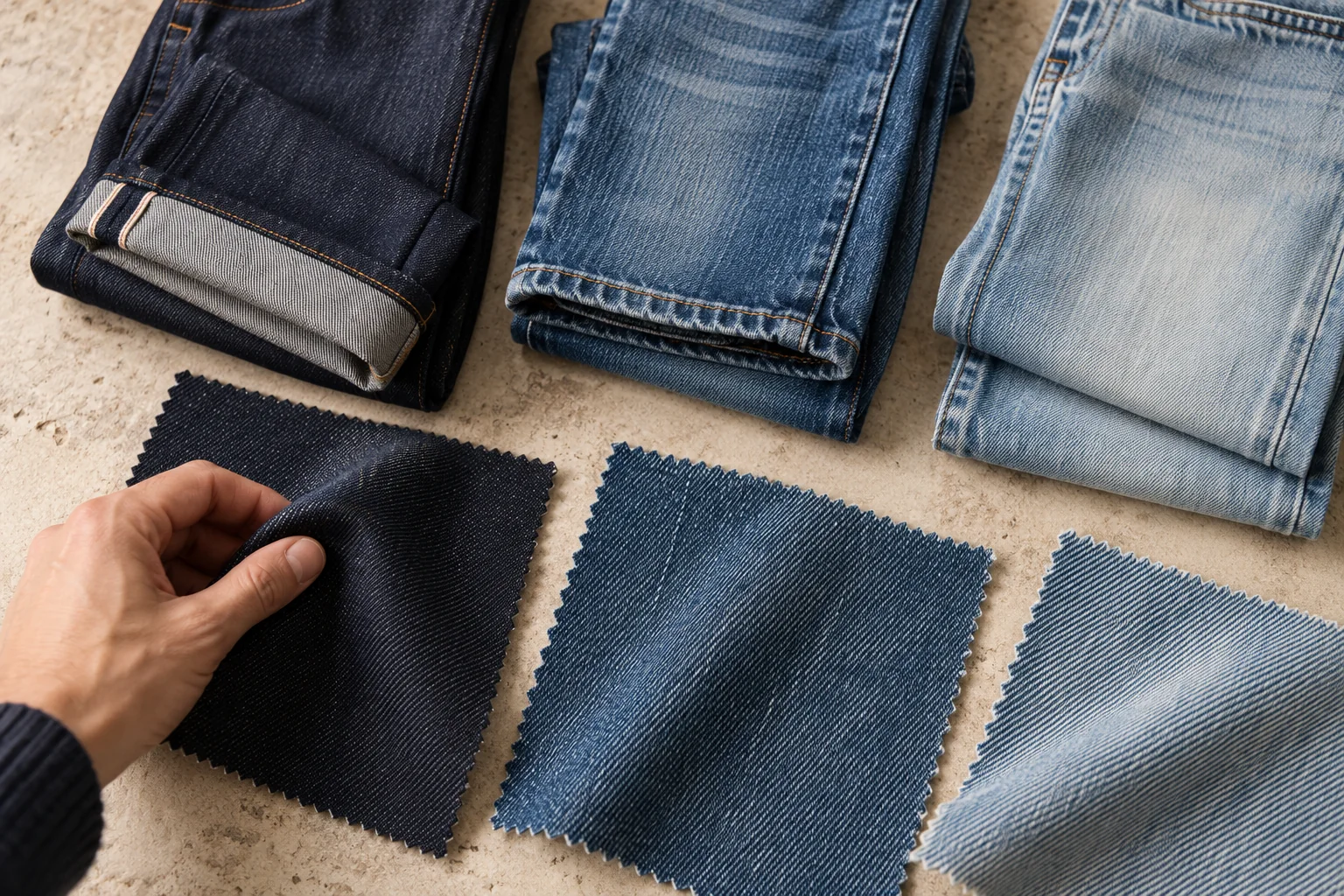
- Fabric: fiber composition, stretch, weight, surface feel and care instructions.
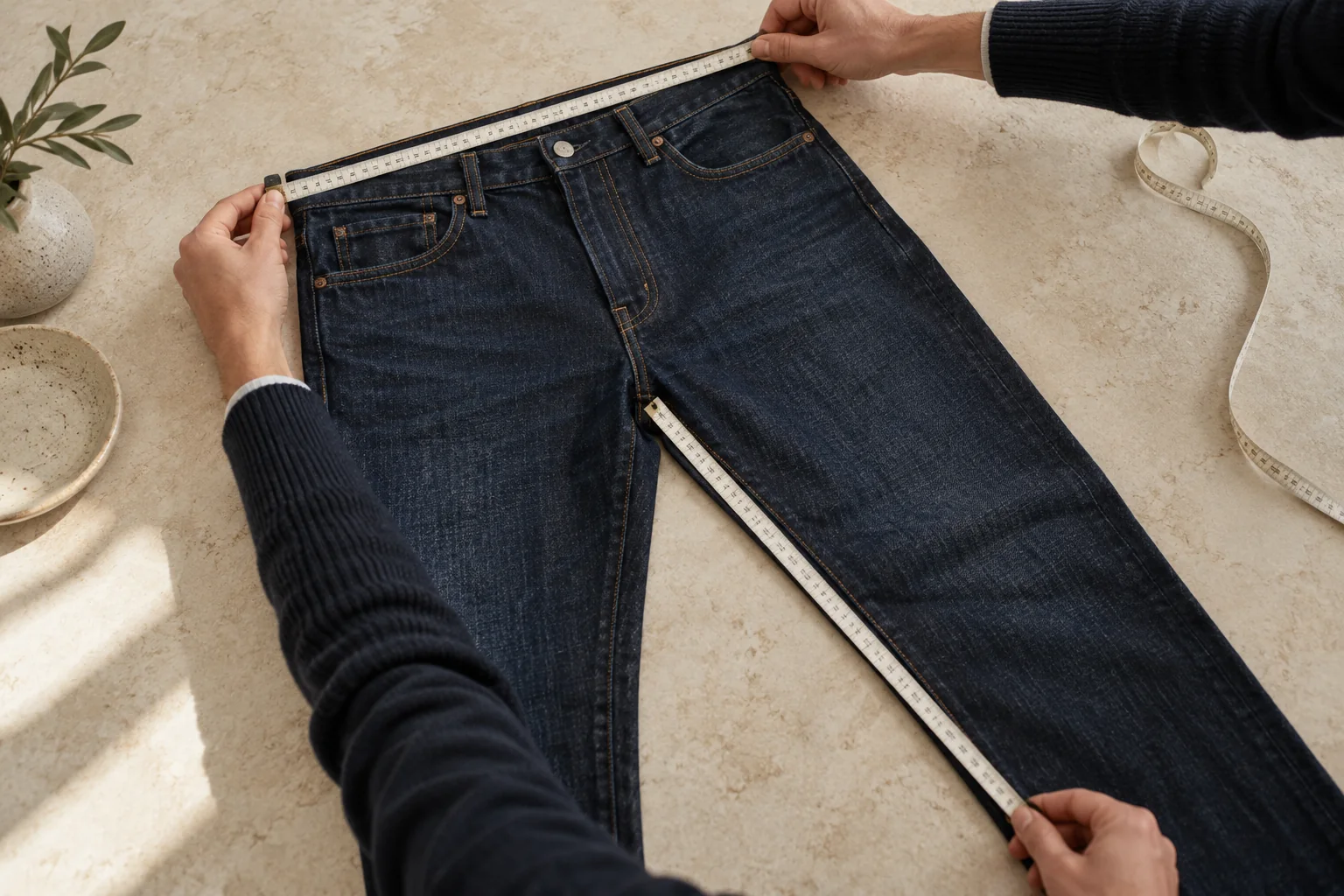
- Size information: whether the brand supplies garment measurements and model-specific notes.
- Total price: current checkout price, shipping, taxes and likely tailoring costs.
- Policy: delivery times, return window, exchange process and any final-sale restrictions.
Build a useful shortlist
Choose two or three pairs that solve the same need: perhaps a dark everyday jean, a travel-friendly pair or a straighter leg to wear with boots. Compare them on a simple scorecard, but let your personal priorities set the weights. If comfort is critical, give room and fabric more weight. If you need one pair for casual office wear, prioritize wash, hem and how it works with the shoes you already own.
Where the brands fit into the research
We keep an open brand index for labels such as Mott & Bow, Everlane, DUER, Buck Mason, Levi's, The Perfect Jean, Bonobos, True Classic and Cuts. The index is a set of research starting points, not a ranking or a claim that every label has the same product range. Check each current collection directly, then compare individual garments against the same fit and policy questions.
For Mott & Bow specifically, see our fit and sizing guide, which links to the brand's own size information and notes where product-specific checks matter.
Read reviews with a little distance
Reviews can reveal recurring problems such as inconsistent sizing, slow delivery or unexpected fabric feel, but one person's height, preferred fit and tolerance for stretch may not match yours. Look for patterns across multiple reviews, date, and the exact style they bought. A review written about a different wash or older version may not apply to the current item.
Decide what "value" means for you
Value is the intersection of fit, comfort, use and price. A lower price may be the right choice if the pair fills the need and holds up to your routine. A more expensive pair only makes sense when its fabric, construction, fit or service offers something you genuinely want. Do not treat a high price as proof of better denim, or a discount as proof of a bargain.
Make a decision you can explain
Pick the pair that fits the wardrobe and the body you have, within a return policy you understand. If two options are close, choose the one that works with more of your existing clothes or has clearer product information. For a fit-first starting point, use our jeans fit guide and measurement steps.